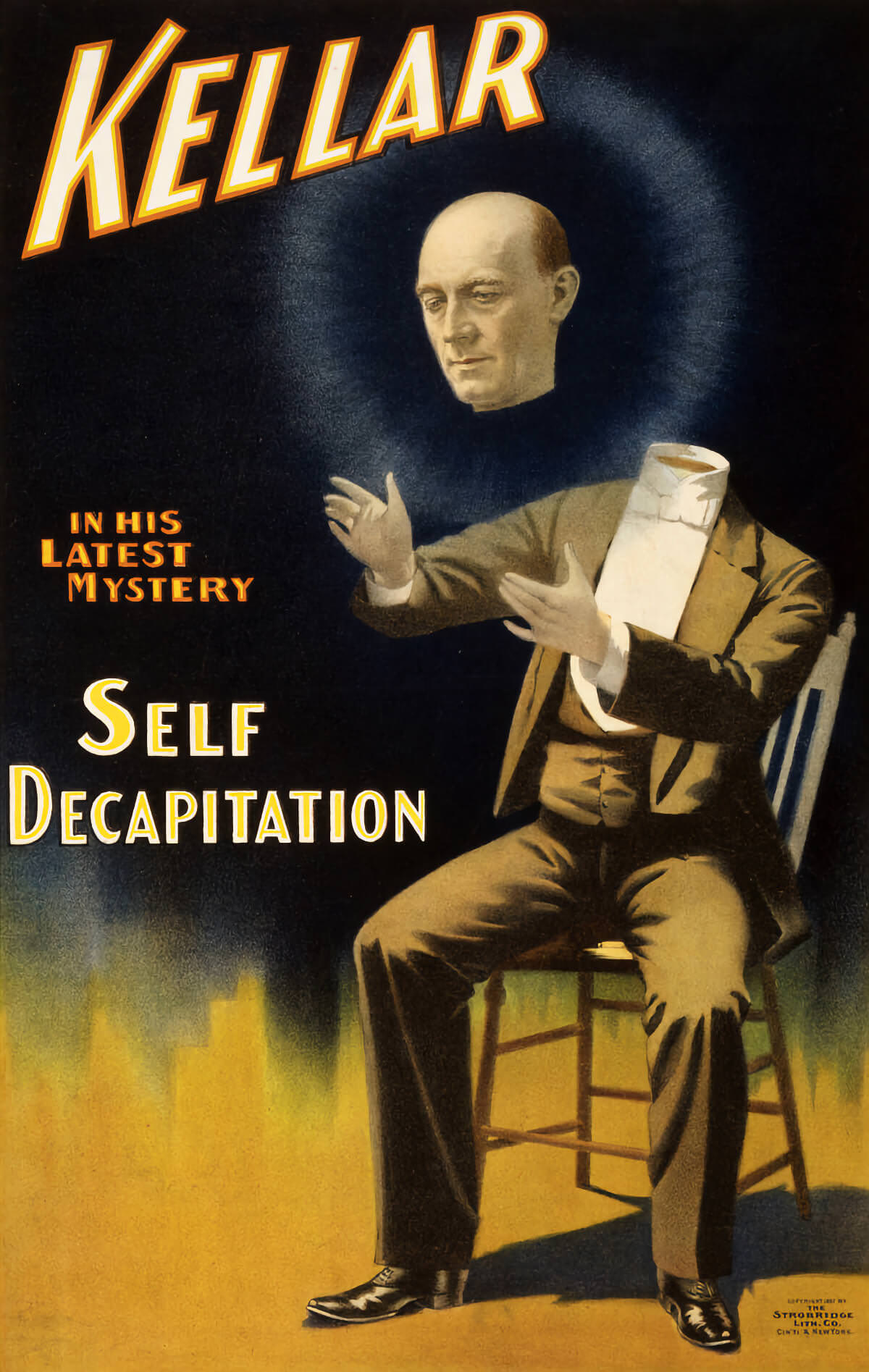
Bold lettering spells “Kellar” across a dark, smoky backdrop, immediately setting a theatrical mood befitting late-19th-century stage magic. The cover art dramatizes the notorious “Self Decapitation” illusion by presenting the magician’s head seemingly detached and hovering above a neatly dressed body, hands posed mid-gesture as if inviting the audience to doubt their own eyes. With its saturated colors and spotlight-like haze, the composition sells mystery first and explanation never—exactly the promise a vaudeville-era poster was meant to deliver.
At the center, the visual trick is simple and startling: a calm, lifelike face floats where a neck should be, while the performer sits upright on a chair in formal attire, the severance implied rather than shown. Typography does much of the showmanship, too—“IN HIS LATEST MYSTERY” frames the act as a fresh sensation, while “SELF DECAPITATION” lands as the headline shock. The contrast between dignified presentation and macabre suggestion captures how classic illusionists balanced refinement with just enough menace to keep crowds leaning forward.
For readers interested in Harry Kellar, vintage magic posters, and the history of theatrical advertising, this 1897 artwork offers a vivid window into the era’s visual language of astonishment. It’s less a documentary record of stage mechanics than a carefully engineered invitation to buy a ticket, built from bold type, dramatic lighting effects, and a single unforgettable image. As cover art, it also reminds us how early entertainment marketing turned illusion into icon—selling wonder through design long before a curtain ever rose.