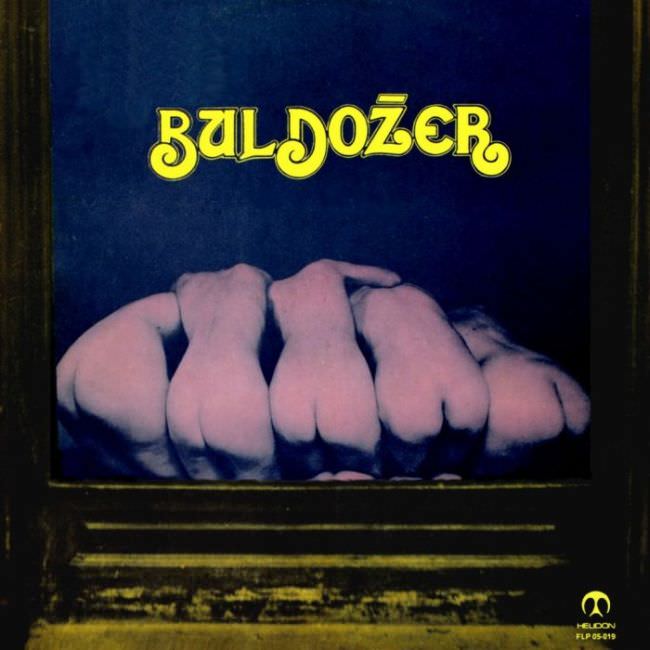
Bold typography shouting “Buldožer” hovers over a claustrophobic, flesh-toned mass that reads like a row of curled bodies or limbs pressed together, the whole scene sunk into a deep blue haze. The composition is unsettling on purpose: less a celebration of pop glamour than a provocation, using discomfort and ambiguity as the hook. Even the frame-like border and small label mark in the corner reinforce the sense of an artifact from a physical media era—designed to be stared at from a record rack, then argued over on the walk home.
Yugoslav album cover art in the 1970s and 1980s often lived in the gap between limited production resources and maximal conceptual ambition, and this kind of imagery shows how designers and bands compensated with shock, surrealism, and dark humor. Instead of polished portraits and predictable genre signals, you get visual riddles: bodies reduced to shapes, color choices that feel bruised or nocturnal, and lettering that borrows from psychedelic and countercultural styles. The “ugly truth” isn’t simply bad taste—it’s how frequently “ugly” was a deliberate aesthetic strategy to resist blandness and sell attitude in a crowded, state-shaped marketplace.
Fans searching for Yugoslavian album art, Balkan record sleeves, or 1970s–1980s cover design will recognize the telltale tension here: handmade ingenuity meeting the desire to look dangerous, clever, or unclassifiable. The image works like a miniature manifesto, promising music that won’t behave nicely and packaging that refuses easy interpretation. In the end, that uneasy beauty is exactly why these covers keep resurfacing online—equal parts design history, cultural snapshot, and weird little dare.