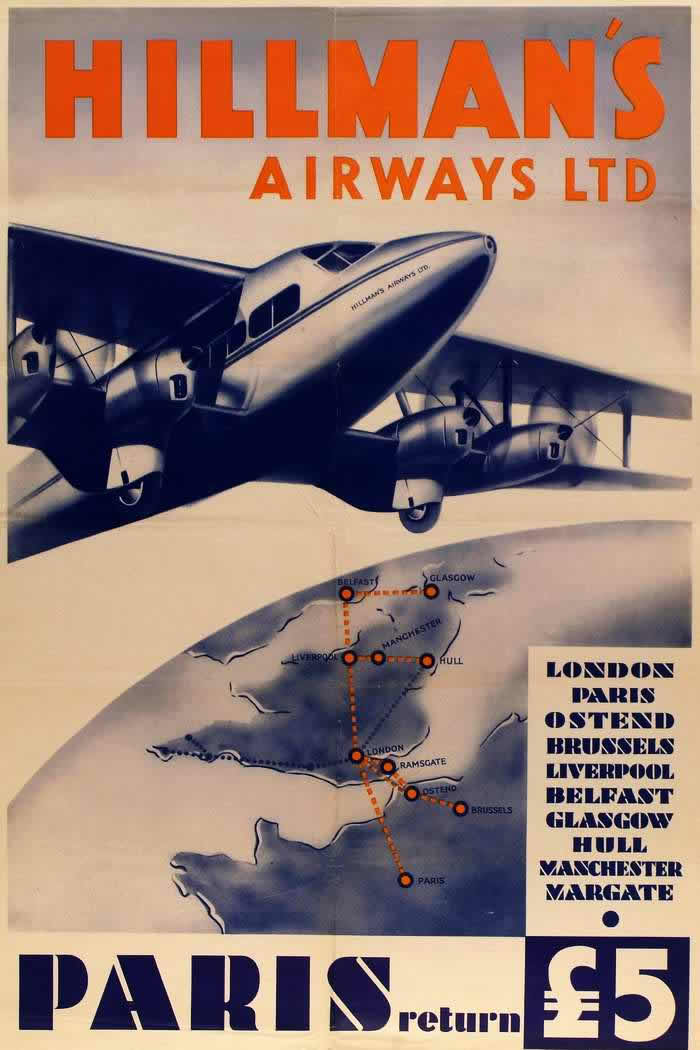
Bold typography and streamlined aircraft design do more than sell a ticket here—they sell the very idea of modernity. The poster’s dramatic angle thrusts the airliner forward, pairing sleek metal and confident lettering to suggest speed, safety, and prestige. As cover art for a post on early airline advertising in the 1920s and 1930s, it shows how travel companies turned aviation into a symbol of progress long before flying became routine.
Route maps and destination lists anchor the romance in practical detail, guiding the eye across a network of cities while promising an easy leap over sea and countryside. The inclusion of a fare—“Paris return £5”—speaks to the era’s marketing shift from daring adventure toward attainable convenience, inviting middle-class travelers to imagine weekend escapes and business trips made faster by air. Even the layout feels like a timetable reimagined as art: information-rich, yet visually persuasive.
Although your post title highlights Imperial Airways posters, this piece also reflects the broader visual language used across early British commercial aviation, where strong branding and simplified geography helped audiences trust a new technology. It’s a reminder that the golden age of travel was built as much with ink and design as with engines and airfields. Readers interested in vintage airline posters, 1930s travel art, and the history of early air travel will find plenty to admire in this persuasive blend of graphic design and aspiration.