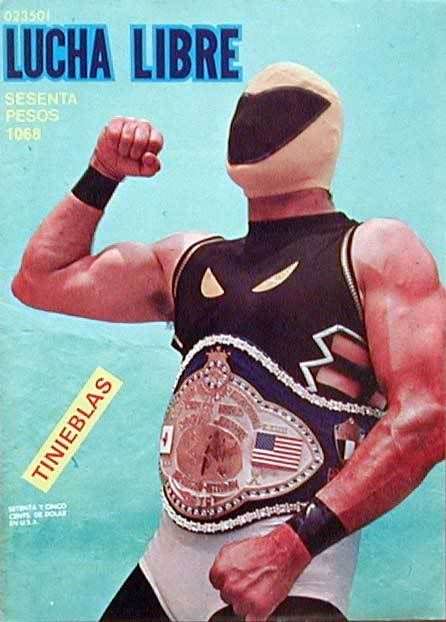
Bold block letters spelling “LUCHA LIBRE” crown this cover, instantly announcing the world of masked spectacle and ring mythology that defined so much 1970s wrestling media. Against a clean, turquoise backdrop, a masked luchador strikes a powerful pose—one arm flexed, the other clenched—turning his body into a living emblem of strength and drama. The design’s simplicity pulls the eye straight to the character and the costume: dark mask and top, pale tights, and sharp graphic shapes that read clearly even at a glance on a newsstand.
Center stage sits an oversized championship belt rendered with showy detail, a reminder that lucha libre magazines sold more than match results—they sold status, rivalries, and the promise of glory. A diagonal banner shouts “TINIEBLAS,” using bold typography and placement to transform a name into a headline, the kind of branding that made these covers feel like posters for a larger-than-life saga. Even the visible pricing and issue markings contribute to the period feel, grounding the theatrical imagery in the everyday reality of a collectible print culture.
Collectors and design lovers alike return to lucha libre magazine cover art because it captures the era’s blend of sports reportage and pop iconography. The masked hero becomes both athlete and character, with color, layout, and typography doing as much storytelling as any written feature inside. For anyone exploring vintage wrestling magazines, Mexican lucha libre history, or 1970s graphic design, this cover offers a vivid entry point into a world where blood, masks, and glory were always only one issue away.