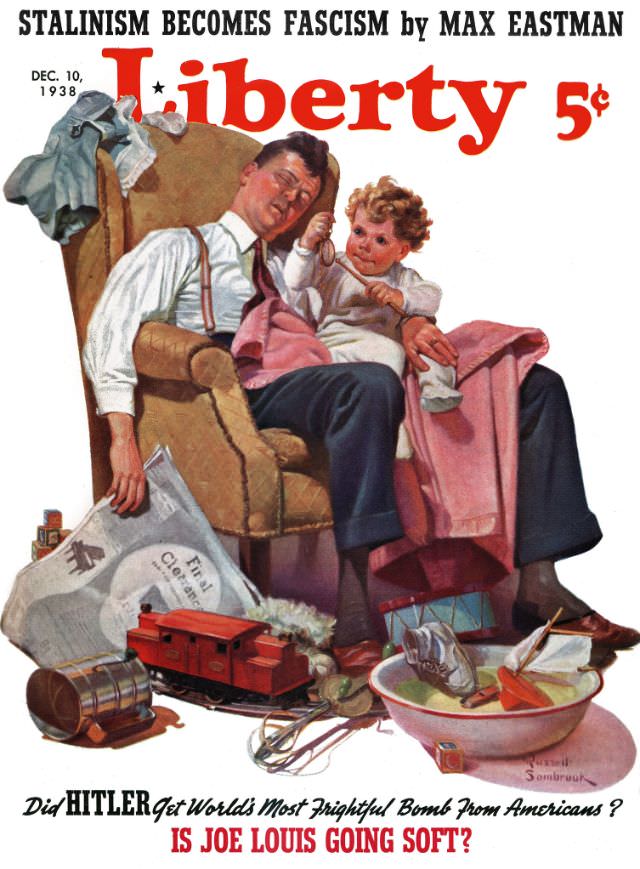
December 10, 1938 finds *Liberty* selling for 5¢, its bold red masthead hovering over a warmly painted domestic scene. A tired father slumps in a worn armchair, suspenders loosened, while a small child perches close and tugs at his face with the curious insistence only children have. The illustrator’s soft shading and cozy textiles suggest home comfort, even as the man’s posture hints at exhaustion after a long day.
Around the chair, the floor tells its own story: a toppled toy train, scattered playthings, and household clutter that feels instantly familiar. A newspaper drapes near the man’s hand, and the child’s attention becomes the action of the cover—an intimate interruption that turns a quiet moment into a narrative. It’s the kind of magazine cover art that sold not just articles, but recognition, inviting readers to see their own living rooms and family rhythms reflected back at them.
Above and below this scene, the cover lines pull the eye from hearth to headline, a reminder of how 1930s popular magazines balanced private life with looming public anxieties. The issue teases topics ranging from politics—“STALINISM BECOMES FASCISM” by Max Eastman—to war fears and sports talk, all packaged beside an image of parenthood and play. For collectors and history-minded readers, this *Liberty* cover is a vivid snapshot of American illustration, mass-market publishing, and the tense, transitional mood of late 1938.