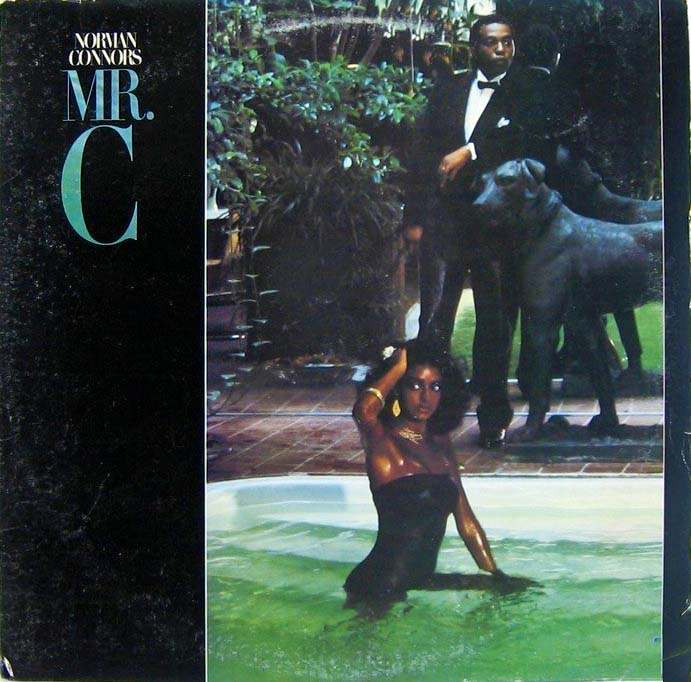
A cool slab of typography dominates the left side of this 1960s–1970s-style album cover: “MR. C” appears in oversized, elegant lettering beneath the artist credit “Norman Connors,” setting a tone of sleek sophistication before the eye even reaches the photograph. That stark, modern text block feels like a gallery label, daring the listener to treat the record as design object as much as music. It’s minimalist and bold at once—an unmistakable cue that cover art in this era was playing with negative space, scale, and attitude.
On the right, the scene turns theatrical: a tuxedoed man stands posed beside a pool, framed by dense greenery and an imposing dark dog (or dog-like statue) that reads as part guardian, part symbol. In the water below, a woman rises in a dark strapless look, her skin catching the light against the pool’s green-blue surface, as if the image were staging a glamorous, slightly surreal narrative. The composition leans into contrast—formal wear versus wet skin, cultivated garden versus rippling water—creating a cinematic tension that feels intentionally provocative.
Taken together, the design is a strong example of the unusual and unconventional album cover aesthetics that flourished in the 1960s and 1970s, when jazz, soul, and crossover records often leaned on fashion photography, symbolism, and high-drama mise-en-scène. Even without extra context, the cover communicates luxury, mystery, and a hint of danger, the kind of visual storytelling that made vinyl jackets unforgettable on a record-store wall. For anyone exploring vintage album cover designs and classic cover art trends, “Mr. C” offers a striking case study in how typography and staged photography could sell a mood before a single track played.