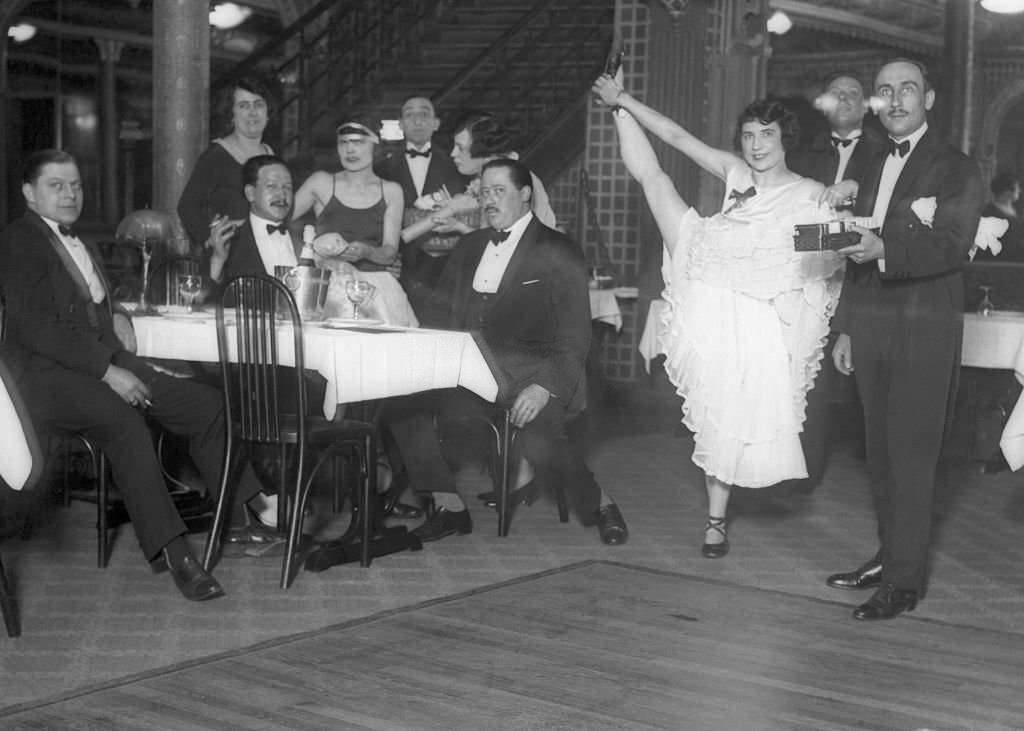
Under the glow of ceiling lamps and the dark sweep of a staircase behind, the Bal Tabarin’s dining floor becomes a stage of its own. Men in formal evening wear sit close to small, white-clothed tables set with glasses and bottles, pausing mid-conversation as the night’s entertainment steps directly into their space. The setting feels half restaurant, half theatre—intimate, crowded, and built for spectacle.
At the right, a smiling dancer lifts her leg high in a bold cancan-style pose, her ruffled dress fanning outward to show the movement’s famous flash and force. A man beside her holds a tray as if presenting the performance like a prized offering, while others look on with practiced amusement and curiosity. The juxtaposition of starched tuxedos, cigarette smoke, and athletic dance captures the particular chemistry of Paris nightlife, where elegance and provocation were meant to mingle.
“Wicked” was a convenient label for such venues, but the photograph hints at something more complex: modern leisure, shifting social codes, and the commercial thrill of cabaret culture in the early 20th century. Bal Tabarin’s reputation rested on precisely this blend of glamour and daring—high energy entertainment delivered at arm’s length, with the audience woven into the scene. For anyone tracing the history of the cancan, Paris cabarets, or Belle Époque fashion and culture, the image reads like a lively advertisement for an evening where manners loosened and the city’s night persona took over.