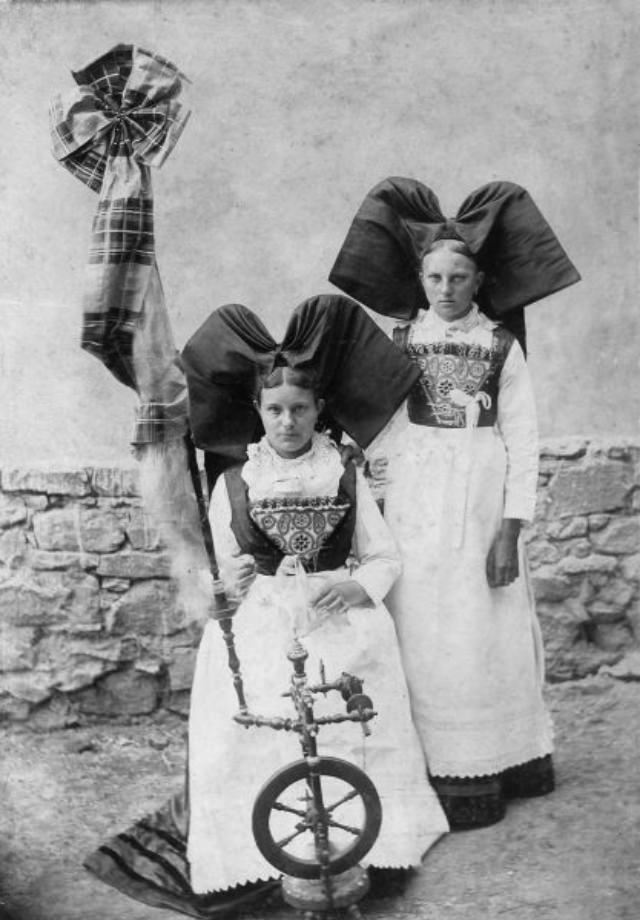
Two young women in Alsatian traditional dress stand posed before a rough stone wall, their expressions calm and direct as they face the camera. The defining feature is the dramatic, oversized bow headdress—an iconic element of early 20th-century Alsace costume—framing each face like folded wings. Crisp white blouses and long aprons contrast with dark bodices decorated with intricate patterns, creating a striking balance of simplicity and ornament.
In the foreground, a spinning wheel anchors the scene, hinting at the domestic skills and textile traditions that shaped everyday life as much as festive attire did. Beside them rises a tall staff topped with a large plaid bow and trailing fabric, adding vertical movement and a ceremonial feel to the composition. Whether these objects served as symbols of craft, community, or display, they deepen the photograph’s sense of lived culture rather than mere costume.
Early 20th-century photography often treated regional clothing as a record of identity, and this portrait does exactly that, preserving details of fashion, workmanship, and social presentation. The careful layering of lace, embroidery, and clean linen speaks to local pride and the importance of public appearance on special occasions. For anyone searching for Alsace history, French regional costume, or traditional European headdresses, the image offers a vivid window into the era’s fashion and cultural heritage.