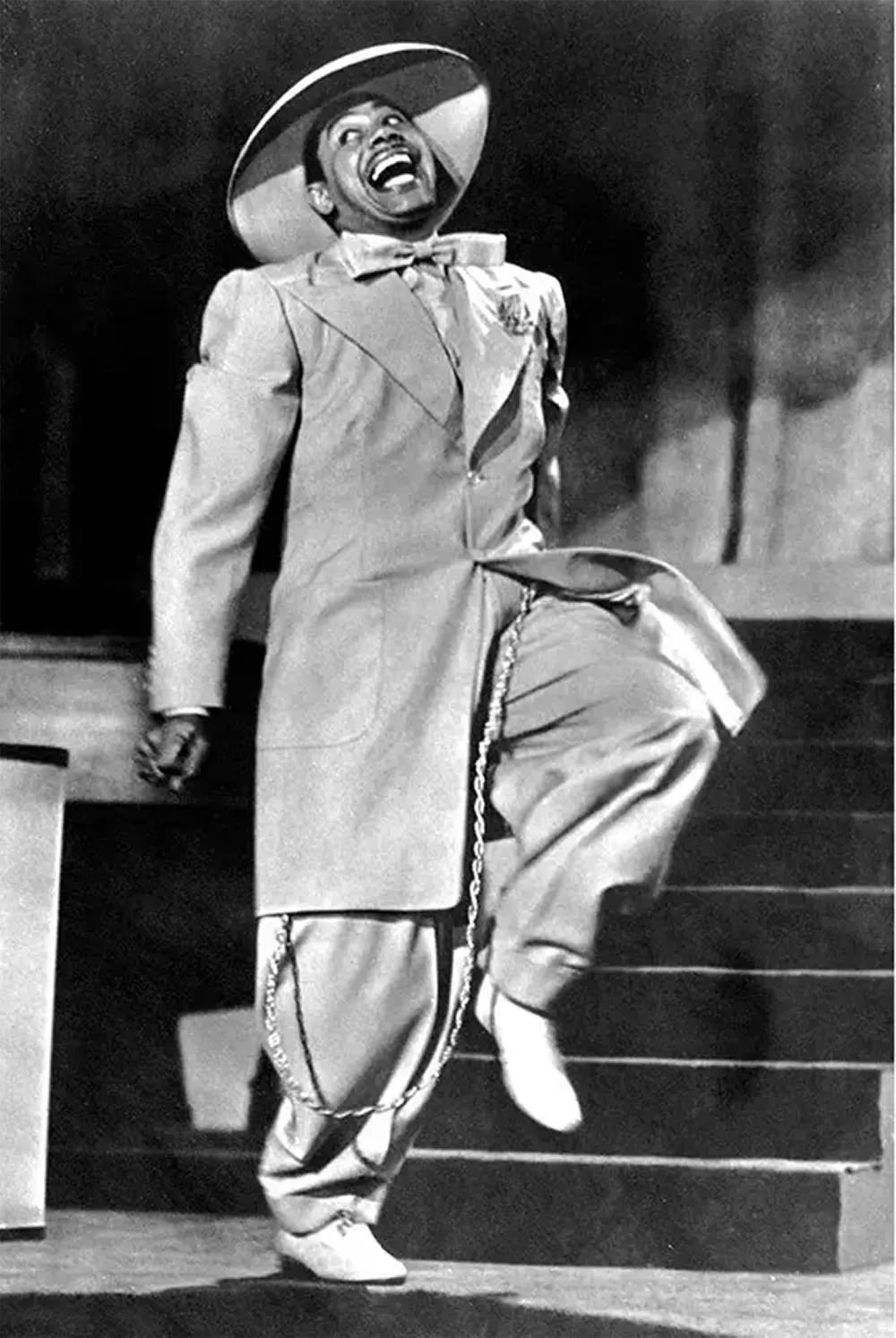
A performer bursts into motion on a stage, grinning wide beneath a dramatic, broad-brimmed hat. The spotlight catches the sharp angles of a long, tailored coat and an oversized bow tie, while the figure’s raised knee and jaunty posture make the outfit feel even bigger than it already is. Everything about the pose advertises swagger—clothes meant not just to be worn, but to be seen.
The zoot suit’s signature exaggeration is on full display: padded shoulders, an elongated jacket, and generously cut trousers gathered at the ankle, accented by a swinging chain. Paired with bright shoes and theatrical styling, the look turns fabric into attitude, echoing the era’s dance halls and bandstands where style and sound fed each other. It’s easy to understand why Cab Calloway praised the zoot suit as “the ultimate in clothes”—a uniform of confidence designed to command the room.
Yet the same flamboyance that thrilled audiences also carried cultural weight, becoming a lightning rod in debates about identity, youth, and belonging. In the wider story often linked to the Zoot Suit Riots, fashion becomes more than trend; it becomes a contested symbol, read differently by insiders and outsiders alike. For readers searching the history of zoot suits, swing-era style, and American fashion culture, this image distills the allure—and the tensions—wrapped into one unforgettable silhouette.