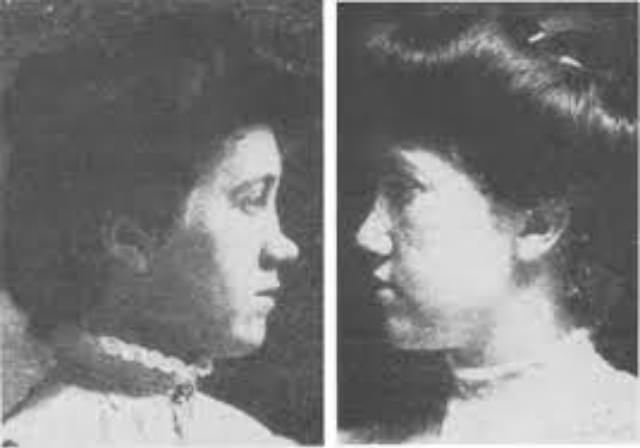
Side-by-side profile portraits place a young woman’s face under close scrutiny, the kind of comparative framing often used in early discussions of cosmetic surgery. The tight crop and matching angle invite viewers to look for subtle changes in the bridge and tip of the nose, turning a private feature into public evidence. Even in this grainy reproduction, the visual logic is clear: before-and-after storytelling made medical technique legible to a mass audience.
In the 1920s and 1930s, rhinoplasty sat at a crossroads of fashion, modern medicine, and changing beauty ideals. Magazine culture and the rise of screen glamour encouraged a new emphasis on facial harmony, while surgeons promoted reshaping as a practical procedure rather than a radical transformation. These comparison images worked like advertisements and case studies at once, suggesting that refinement could be achieved without disrupting the rest of the face.
What lingers is the period’s confidence in the camera as a judge of improvement, with profile views serving as a kind of scientific proof. The subject’s composed expression and tidy collar echo the era’s preference for neat lines and controlled presentation—values that extended from clothing to features. As a piece of Fashion & Culture history, the photo hints at how rhinoplasty entered everyday conversation, blending aspiration, insecurity, and the promise of modern intervention.