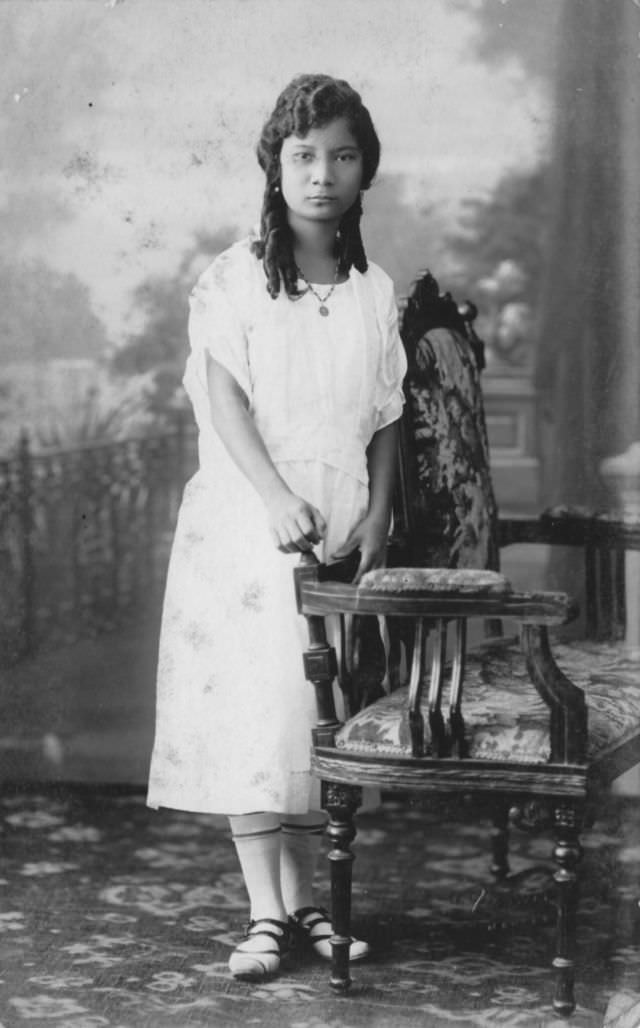
A young Manila woman stands in a studio setting, her calm gaze meeting the camera with an ease that feels both intimate and formal. She wears a light, softly draped dress with short sleeves, the fabric falling in simple lines that highlight the era’s preference for modest elegance. Small jewelry at the neck and ears adds a restrained sparkle, while her carefully styled hair frames her face in loose, period curls.
Beside her sits an ornate wooden armchair with carved details and patterned upholstery, a common prop in early portrait photography that signaled refinement and domestic comfort. Her hand rests near the chair’s arm, a gentle pose that suggests composure rather than performance. The painted backdrop, with its hazy architectural and garden-like forms, creates the illusion of a grand interior and lends depth to the portrait without distracting from the sitter.
Fashion and culture in Manila during the early 1900s often blended local sensibilities with global influences, and portraits like this preserve those subtle negotiations in cloth, posture, and presentation. The practical shoes and visible stockings hint at everyday modernity, while the overall styling keeps to the dignified conventions expected in formal photographs. As a vintage Manila portrait, it offers more than a pretty likeness—it’s a window into how women of the time chose to be seen, remembered, and recorded.