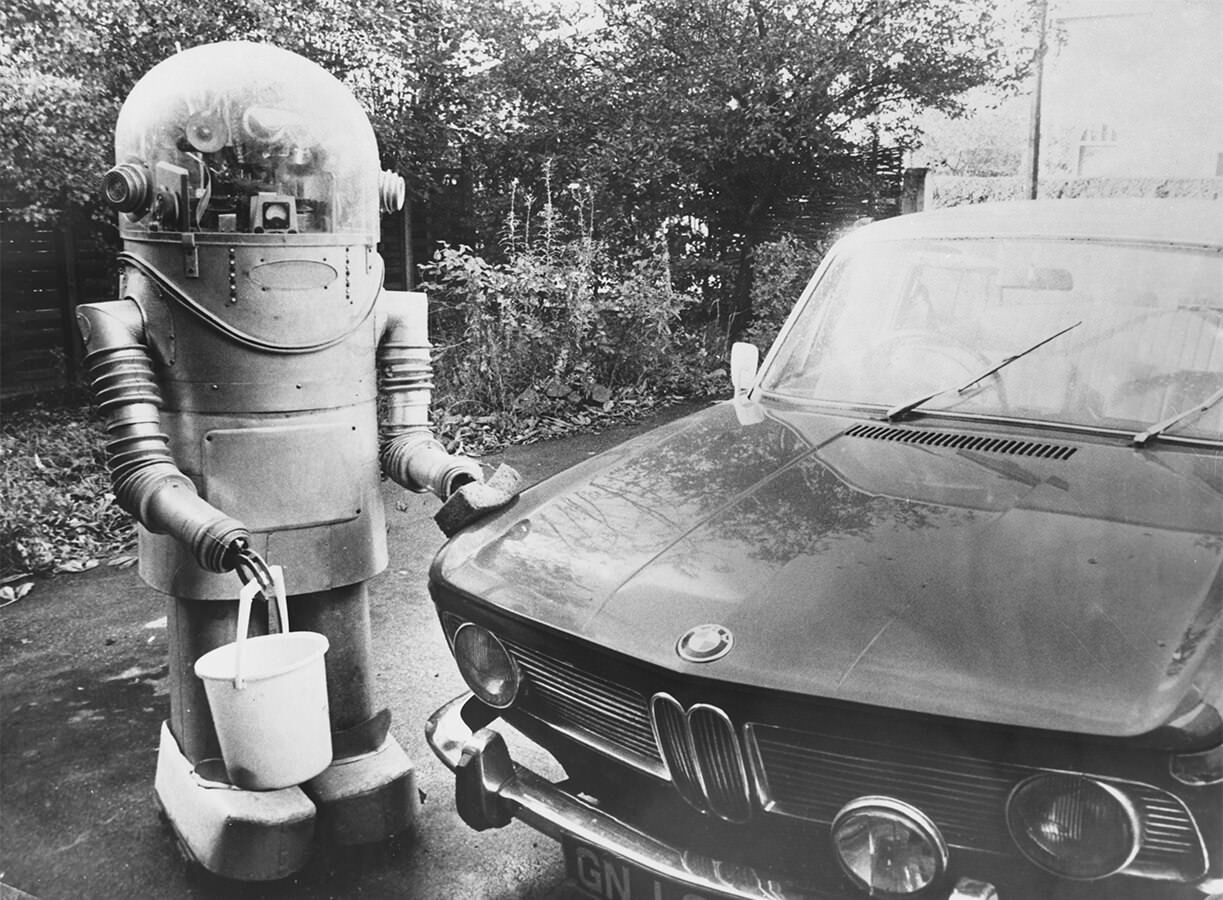
Steel and optimism meet in this 1960s scene, where Tinker the robot stands beside a car with bucket and sponge in hand, posed like a dutiful housekeeper on driveway duty. The domed head, visible wiring, and corrugated arms make the machine look both homemade and futuristic, the kind of invention that promised to turn everyday chores into push-button convenience. Even without a workshop in view, the photo suggests a hands-on era when “the future” was something you could assemble and demonstrate in your own backyard.
Tinker’s appeal is in the ordinary task chosen to sell an extraordinary idea: cleaning and caretaking rather than industrial muscle. A robot washing a car speaks directly to mid-century dreams of automated domestic life, when magazines and newsreels loved to imagine mechanical helpers doing the scrubbing while humans enjoyed more leisure. The contrast between the glossy vehicle front and the robot’s riveted body captures that moment when modern consumer life and experimental robotics started to overlap.
Seen today, the image reads as a charming snapshot of real-life invention culture—part practical demonstration, part performance for the camera. It’s a reminder that 1966’s vision of the future wasn’t only about rockets and computers; it was also about who would do the dishes, sweep the floor, or keep the car clean. For readers interested in vintage robotics, retro technology, and household automation, Tinker offers a memorable glimpse of how close the future once felt, and how imaginative its builders could be.