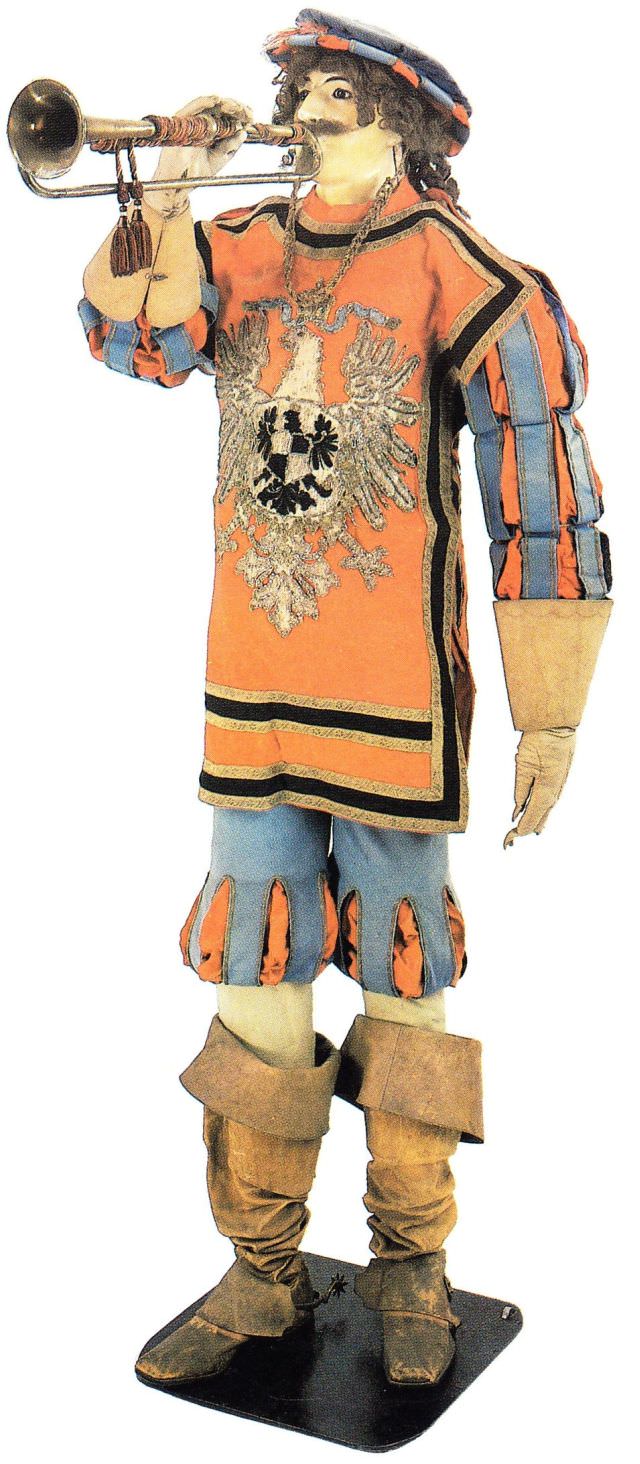
A richly dressed trumpet player stands frozen mid-note, his cheeks rounded as he blows into a long, flared instrument held level with practiced confidence. The costume is the first thing that demands attention: a bright tunic edged in dark trim, puffed sleeves striped with contrasting color, and tall boots that suggest pageantry more than travel. Across his chest, an ornate emblem resembling a double‑headed eagle anchors the figure in a world where music, ceremony, and power often marched together.
Beneath the theatrical finery lies the real fascination hinted at by the post’s theme of “Inventions”: the mechanics of sound and display. The trumpet itself—straight, slender, and seemingly wrapped near the mouthpiece—invites the viewer to think about historical instrument-making, from materials and fittings to how players projected tones across crowded halls and open squares. Whether this figure represents a craftsman’s model, a collector’s piece, or an illustration of period dress, it speaks to the ingenuity that turned metalwork into music.
Friedrich Kauffman’s name in the title adds an intriguing frame, suggesting an association with the culture of innovation that surrounded early musical devices and their makers. For readers searching for historical music imagery, antique trumpet design, or European ceremonial costume, this image offers a vivid starting point—part performance, part craftsmanship, part emblem of status. Spend a moment with the details, and it becomes easier to imagine the fanfares that once announced arrivals, celebrations, and the unfolding of public life.