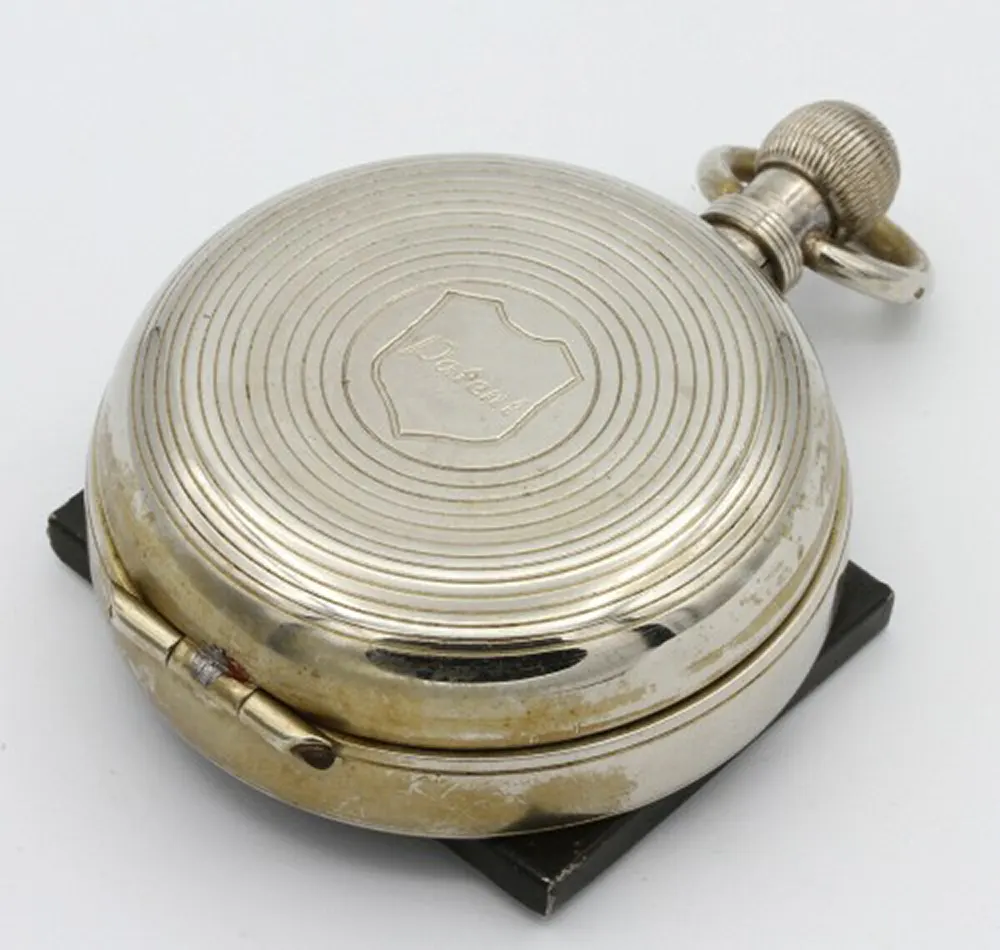
Polished metal and precise machining give the Lancaster Watch Camera the disguise of an ordinary Victorian pocket watch, right down to the ribbed case, winding crown, and loop for a chain. In the photo, the object sits closed, its circular lid catching light in soft rings that hint at careful workmanship and daily handling. A small engraved cartouche at the center reinforces how convincingly it could pass as a gentleman’s timepiece while hiding an entirely different purpose.
What made such a device feel like a marvel in 1893 was the era’s hunger for miniaturization—turning bulky photographic gear into something portable, private, and surprisingly discreet. The watch-like form wasn’t merely stylish; it was functional camouflage, allowing candid photography at a time when a visible camera could draw stares, objections, or staged poses. As a pocket-sized “spy tool,” it embodies the Victorian fascination with clever mechanisms that blurred the line between novelty, utility, and mischief.
Collectors and history buffs are drawn to inventions like this because they reveal how quickly photography became part of everyday life—and how early concerns about surveillance and secrecy already existed. The wear and patina visible on the case speak to an object meant to be carried, handled, and shown off in quiet moments, even as it promised hidden capability. Whether viewed as a technical curiosity or a cultural artifact, the Lancaster Watch Camera remains a striking example of how ingenious inventions could fit into the palm of a hand.