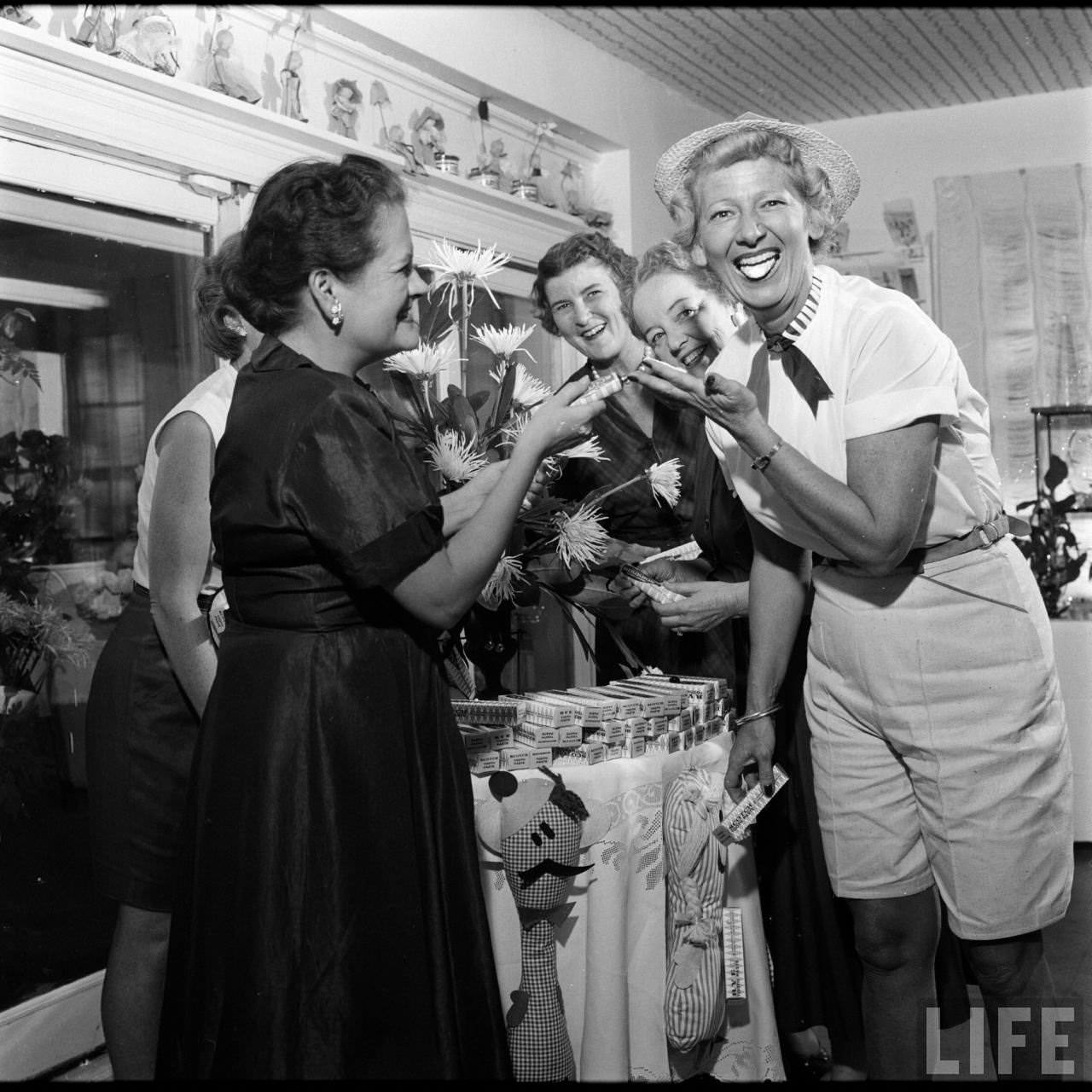
Laughter fills the room as a group of stylish mid-century women crowd around a display table, trading smiles while holding small boxed products like party favors. The setup feels half social gathering, half sales pitch—flowers arranged for charm, stacks of identical packages for emphasis, and a bright, camera-ready grin that practically advertises itself. It’s the kind of scene that explains why 1950s inventions were often sold with personality first and practicality second.
Whiskey flavored toothpaste fits that era’s oddball logic perfectly: take an everyday routine like brushing your teeth and give it a “grown-up” twist meant to feel modern, daring, and memorable. In the competitive postwar marketplace, novelty was a marketing strategy, and flavor became a headline—whether or not anyone actually needed their bathroom sink to resemble a cocktail bar. The photo’s upbeat, communal vibe mirrors how these products were introduced: less like medical necessities and more like conversation starters.
Behind the joke is a revealing snapshot of consumer culture, where packaging, social proof, and a carefully staged moment could make even the strangest idea seem irresistible. For readers who love retro advertising, quirky hygiene history, and the weirder corners of 1950s product design, this image offers a window into how “new and improved” sometimes meant simply “new and amusing.” If you’ve ever wondered what people were willing to try in the name of fresh breath, whiskey toothpaste may be the most ridiculous reason to brush yet.