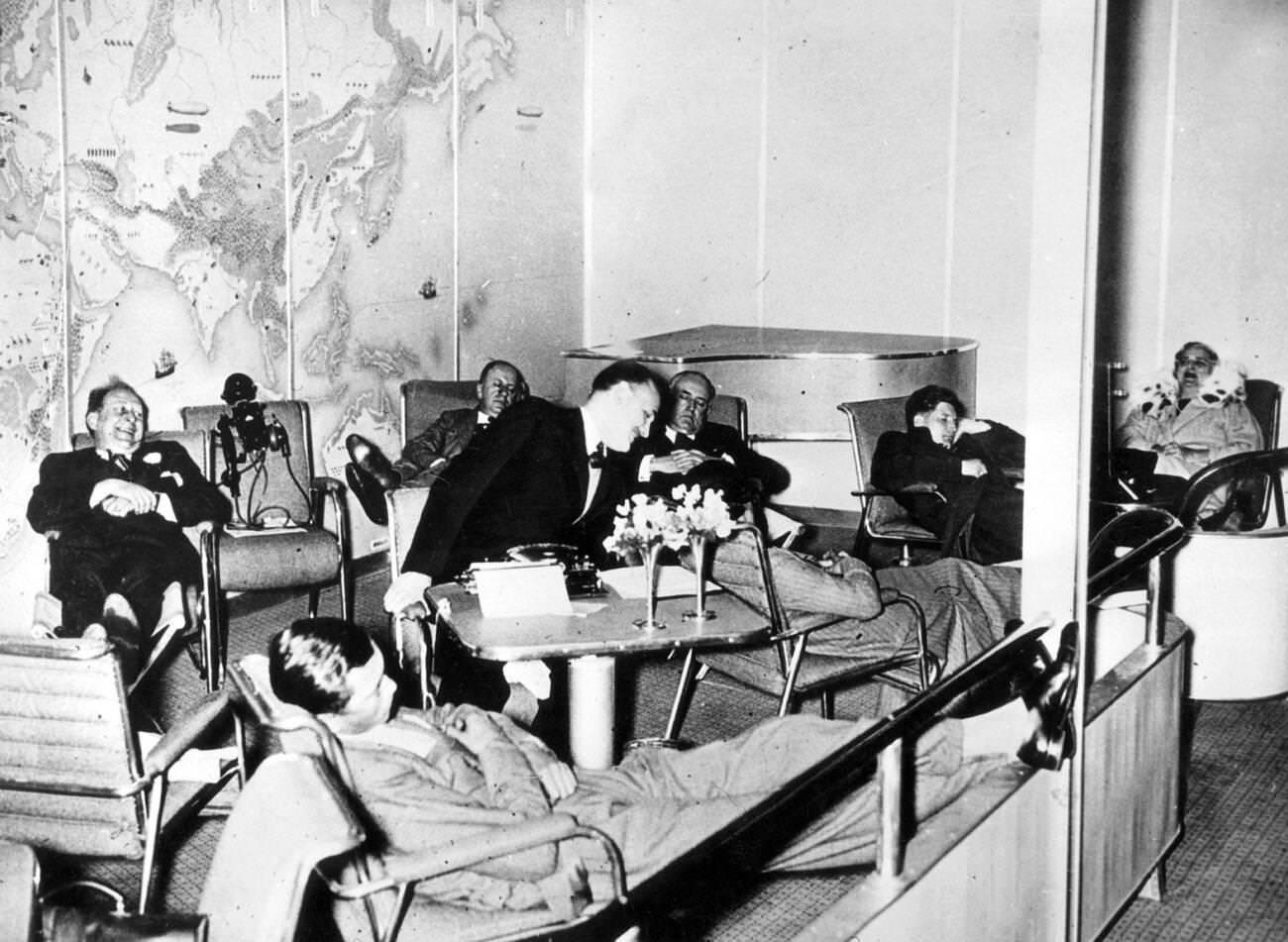
Leather lounge chairs, a low table with flowers, and a sweeping world map mural set the tone in the music room aboard the LZ 129 “Hindenburg” in 1936. In the photograph, passengers relax as if in a modern hotel salon rather than inside a vast airship, with formal suits and easy postures suggesting a carefully curated atmosphere of comfort. The clean lines and bright, uncluttered walls hint at the era’s faith in design and technology—an “inventions” mindset translated into everyday luxury.
Seen up close, the room feels like a crossroads of speed and leisure: a public space meant for conversation, quiet listening, and the polite rituals of travel. The map behind the chairs quietly reinforces the Hindenburg’s promise of global reach, turning geography into décor and aspiration into backdrop. Even small details—the arrangement of seating, the generous legroom, the calm spacing—speak to how the Zeppelin company marketed airship travel as refined, safe, and forward-looking.
For readers interested in aviation history, early passenger experience, and 1930s interiors, this image offers a rare glimpse of life inside the Hindenburg beyond the headlines. It captures the social heart of the airship, where engineering marvel met curated ambiance, and where long-distance journeys were made to feel effortless. As a historical photo, it invites a second look at the period’s optimism: not just how people traveled, but how they imagined the future while doing it.