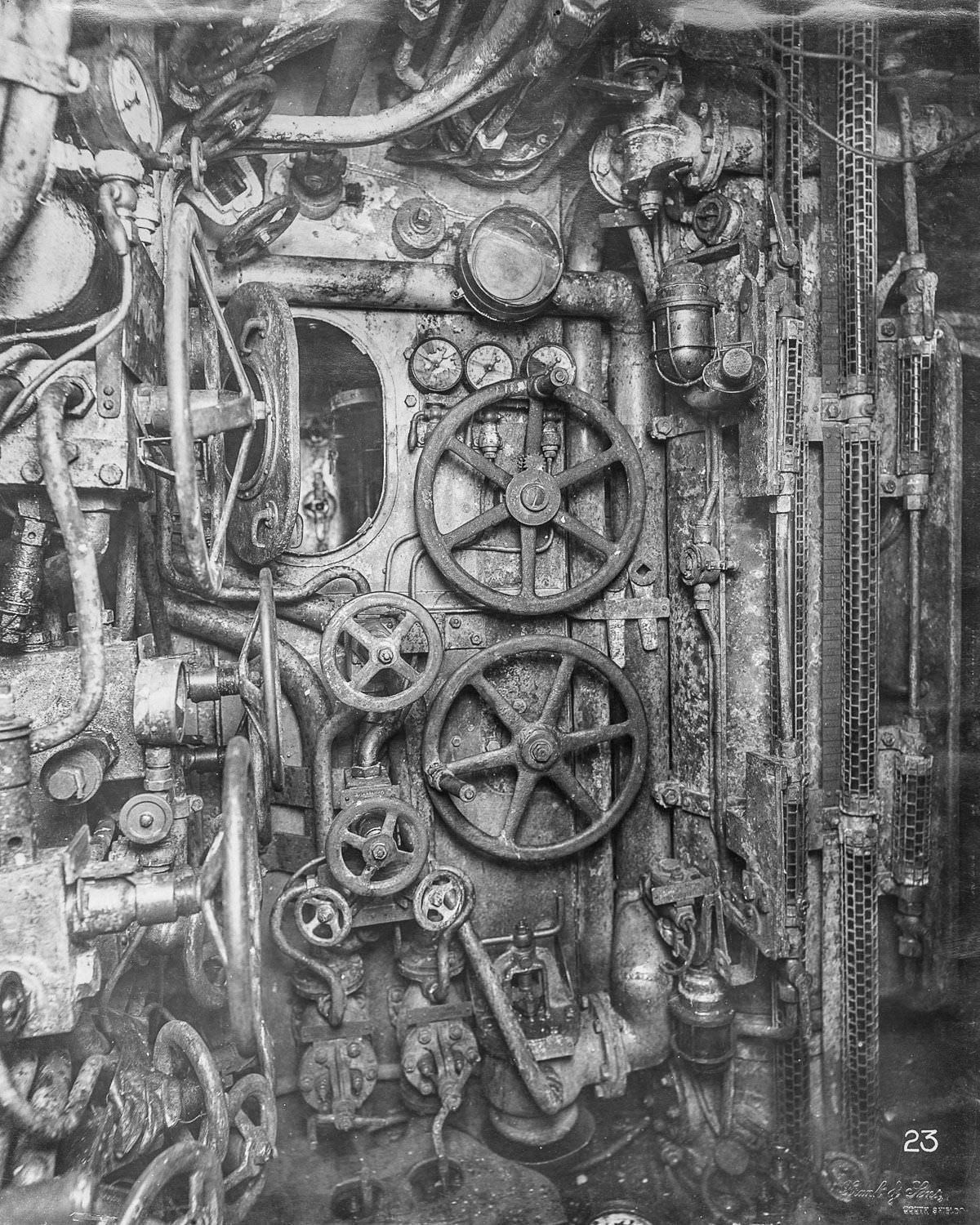
Steel and shadow crowd the frame as the camera looks aft into a compact control room where nearly every surface is claimed by working hardware. Large spoked wheels dominate the center, their worn rims and greasy hubs hinting at constant use, while smaller handwheels cluster below like a secondary language of fine adjustments. Pipes, valves, and stout fittings weave around a watertight doorway, creating the unmistakable feeling of an engineered space built for precision under pressure.
The title draws attention to the periscope-raising and lowering wheels, and the photograph makes their importance easy to imagine: a crew member’s grip, a measured turn, and a vital instrument sliding through the hull’s tight tolerances. Nearby gauges and round-faced indicators sit at eye level, ready to be read at a glance in low light, while heavy linkages and control rods suggest that multiple systems were coordinated from this station. Nothing here is decorative; every knob, lever, and bolted plate is part of a chain of actions that had to work reliably when conditions were least forgiving.
For readers interested in inventions and industrial history, this image is a lesson in how complex machinery was once made readable through tactile design—big wheels for decisive movement, smaller ones for careful trimming, and standardized fittings for maintenance in confined quarters. The scuffed metal, layered grime, and dense arrangement speak to daily operation rather than showroom display, grounding the technology in lived experience. As a historical photo of a control room looking aft, it offers SEO-friendly insight into periscope controls, naval engineering, and the hands-on mechanics that powered an earlier era of underwater navigation.