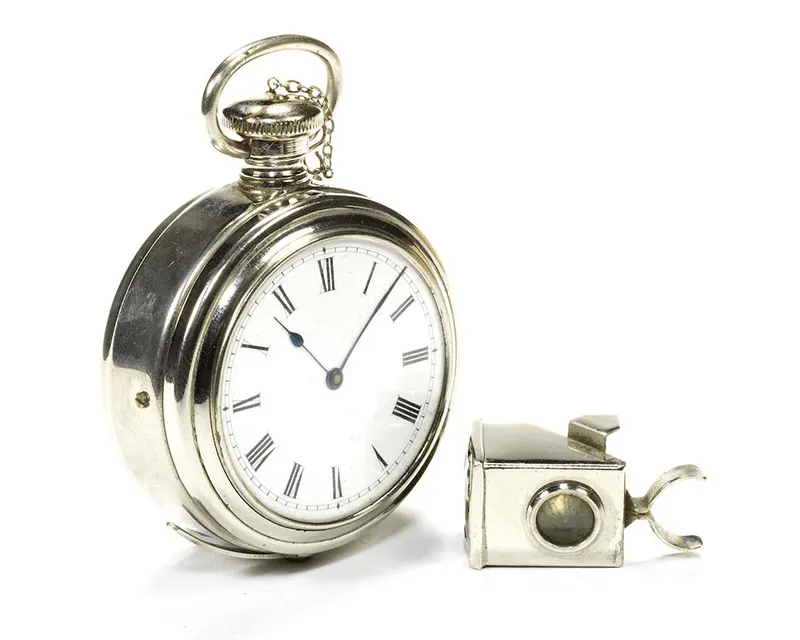
Pocket watches once stood for punctuality and propriety, yet the 1904 Ticka Watch quietly bent those expectations by hiding a camera behind an everyday object. The photo highlights the polished case and classic Roman-numeral dial—nothing about it suggests photography at first glance, which is exactly the point. In an era when cameras were often bulky and conspicuous, this invention promised discretion, turning a simple timepiece into a tool for recording the world unnoticed.
Beside the watch sits a small, boxlike attachment with a circular opening that hints at a lens, underscoring how early “spy camera” ideas relied on modular design. The metal surfaces, the crown and loop for a chain, and the compact add-on together evoke the clever engineering of turn-of-the-century miniature cameras. It’s a reminder that the drive to shrink technology—so central to modern gadgets—was already underway long before digital sensors and smartphones.
What makes the Ticka Watch especially fascinating is the cultural shift it represents: photography moving from staged portraits and public scenes toward candid, surreptitious snapshots. That shift raised new questions about privacy, surveillance, and consent—debates that still echo today whenever hidden cameras or discreet recording devices enter the conversation. For collectors of antique cameras, horological curiosities, and early inventions, this piece sits at a crossroads where craftsmanship, novelty, and unease meet.