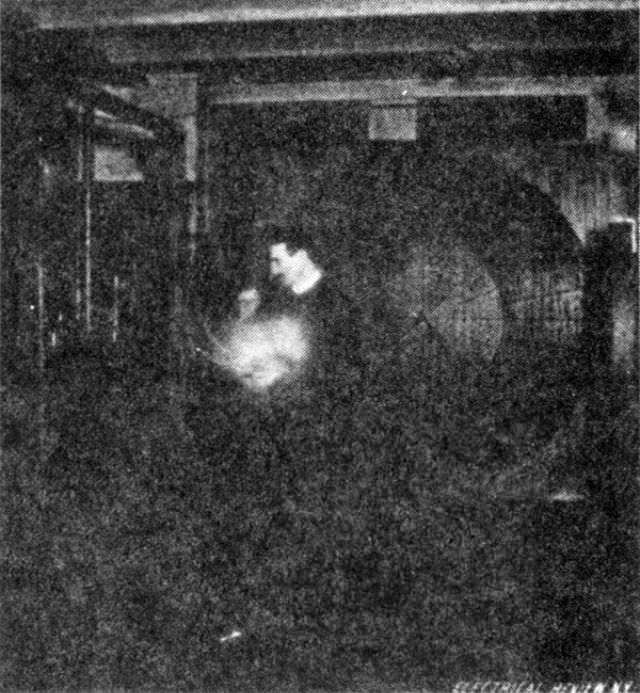
In a dim, cluttered laboratory, an experimenter stands as a living conductor while a vacuum bulb flares into visibility—lit not by wires, but by waves sent from a distant oscillator. The grainy exposure and hazy glow hint at the difficulty of photographing such demonstrations, where high-frequency electricity could turn a human body into part of the circuit. Around him, the workshop-like setting fades into shadow, leaving the eye to chase the ghostly light that proves the point: energy can be transmitted through space and still do work.
Behind the spectacle is a serious question that fueled early electrical research: how do oscillating currents and electromagnetic waves behave when they encounter glass, metal, air, and flesh? The title’s warning about “great electrical pressure” evokes the era’s language for high voltage, a reminder that these were risky, hands-on trials at the edge of what instruments could measure. What looks like stage magic today was once a persuasive argument in debates over wireless power, resonance, and the practical limits of new electrical inventions.
For readers interested in the history of inventions, wireless electricity, and the evolution of laboratory culture, this photograph offers a vivid bridge between theory and demonstration. It captures the moment when proof was often performed in front of witnesses, with glowing bulbs and bodily peril standing in for charts and digital readouts. Seen now, the scene reads as both a technical milestone and a human story about curiosity, bravado, and the long pursuit of making invisible forces visible.