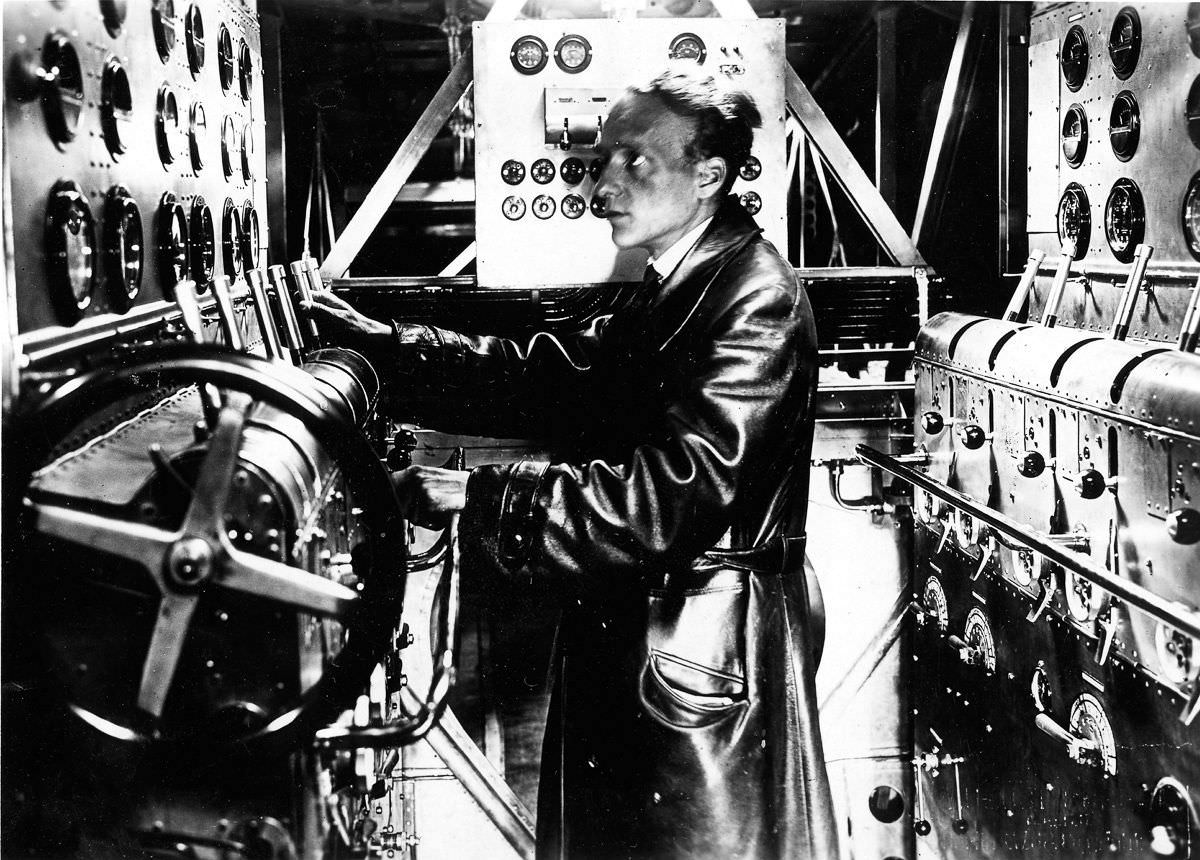
Pressed between walls of dials, levers, and polished metal, a machinist works in the engine room of a flying boat on Oct. 21, 1929. His leather coat catches the light as he reaches toward a dense control cluster, suggesting the heat, vibration, and focus demanded by early aviation machinery. Around him, instrument faces stare back like a mechanical constellation—each gauge a small promise that the engines are behaving.
Flying boats were marvels of their era, blending marine practicality with the daring ambitions of flight, and their engine rooms reveal how complex that marriage could be. The photo’s tight interior—riveted panels, heavy housings, and carefully arranged controls—speaks to an age when reliability depended on constant human attention rather than hidden automation. Inventions weren’t only dreamed up at drafting tables; they were proven here, in cramped compartments where maintenance and operation overlapped.
For readers exploring aviation history, industrial heritage, or the evolution of aircraft engineering, this scene offers a rare look at the working life behind the headlines. The machinist’s posture—steady, alert, and close to the instruments—captures the hands-on skill that kept pioneering aircraft running. As a historical image, it’s also a reminder that progress in flight was built from countless small measurements, adjustments, and decisions made in spaces just like this.