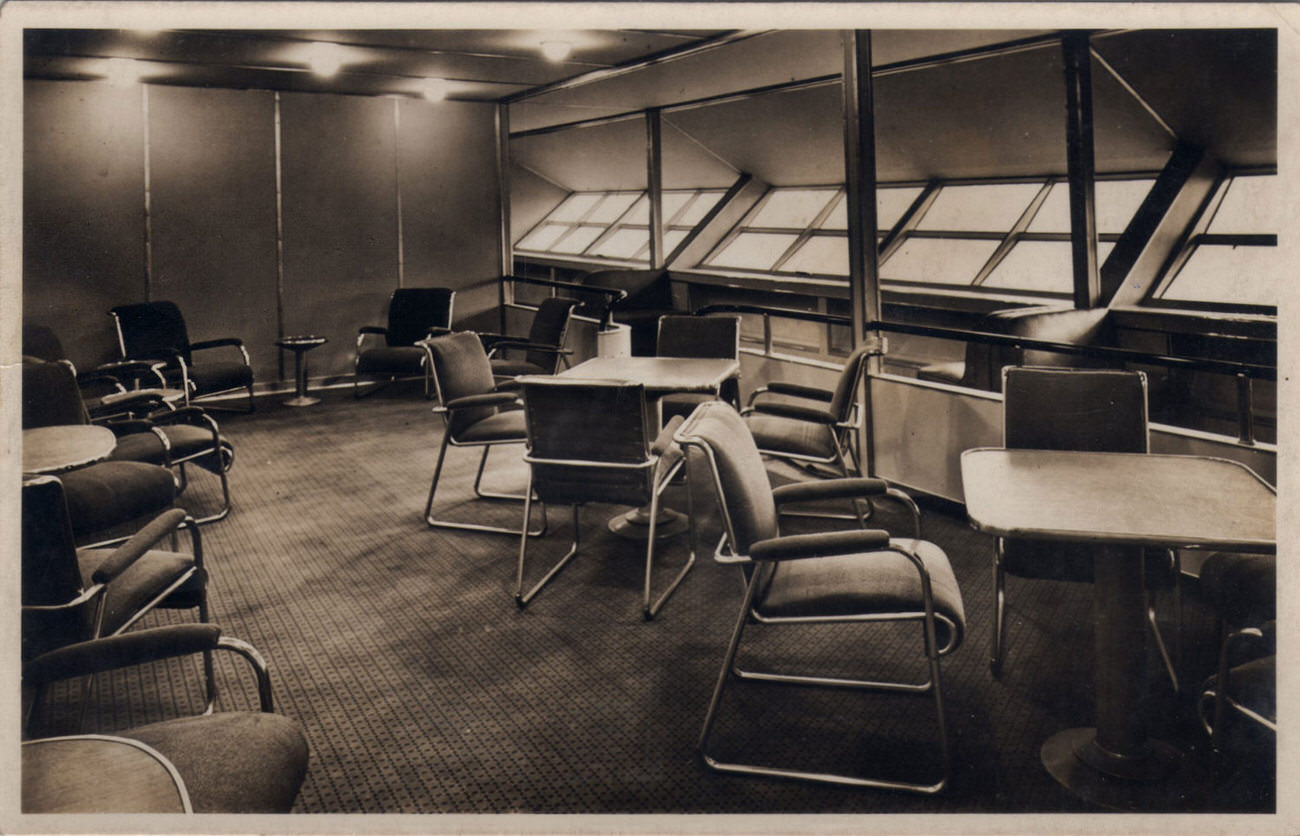
Step into the passenger lounge of the Hindenburg and the first impression is how familiar it feels: a calm, modern room arranged for conversation, cards, and quiet reading. Upholstered chairs with tubular metal arms cluster around small tables, while a patterned carpet and plain wall panels keep the look restrained rather than ornate. Overhead lighting softens the space, suggesting that this was meant to be lived in—not merely admired.
Along the outer wall, the promenade windows become the star of the design, running in a long band and tilting outward to invite light and views. Their angled frames and sturdy supports hint at the engineering challenges of carving a “sea view” into a flying machine, blending comfort with structural necessity. Even without passengers present, the layout implies movement: seats turned toward the glass, tables positioned for lingering, and open floor space that would have made the lounge feel airy despite the craft’s enclosed hull.
As an artifact of aviation history, this interior photograph speaks to an era when airship travel marketed itself as an experience of luxury and novelty, pairing technical ambition with the routines of a refined journey. For readers interested in inventions and design, the lounge offers a compelling snapshot of how early long-distance flight imagined the future—quiet, social, and framed by windows meant for sightseeing at altitude. It’s a reminder that the Hindenburg was not only a feat of engineering, but also a carefully staged environment built to make the extraordinary seem effortlessly comfortable.