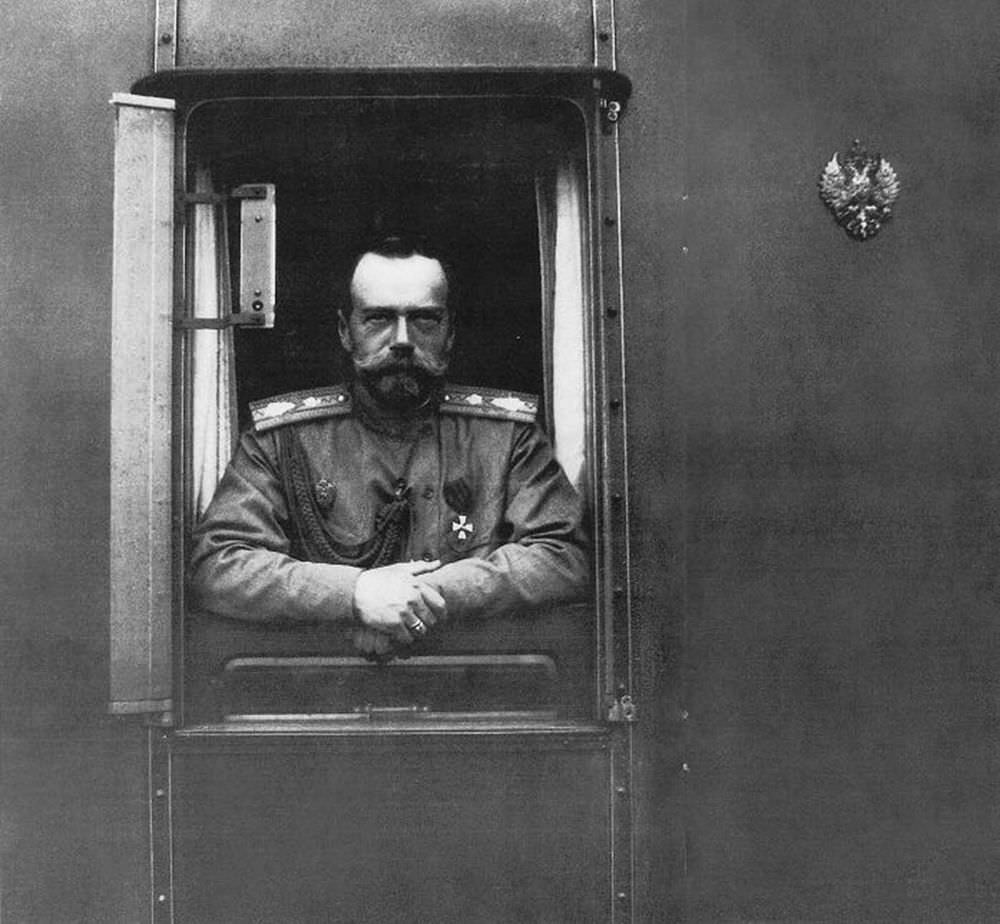
Framed by the narrow window of the Imperial train, Tsar Nicholas II leans forward in uniform, hands folded on the sill, his expression steady and unreadable. The carriage wall around him is plain and functional, yet the small imperial emblem nearby quietly signals rank and authority. It’s a striking contrast: the intimacy of a candid moment set against the heavy symbolism of monarchy.
Railways were among the most important “inventions” of the modern age, shrinking distances and turning travel into a tool of governance as well as comfort. The Imperial train was more than transportation; it was a mobile court, a communications hub, and a stage-managed space where the ruler could be seen while still remaining protected. In this photograph, the window becomes a literal frame for power—close enough to feel personal, distant enough to remain untouchable.
Details in the scene invite a closer look at the craftsmanship and protocol of the era: the fitted window hardware, the crisp lines of the uniform, the medals catching light against dark fabric. For readers interested in Russian imperial history, royal trains, or early twentieth-century political imagery, this picture offers a compact but evocative glimpse into how technology and monarchy traveled side by side. The stillness of the moment lingers, hinting at the vast country beyond the carriage and the uncertain future ahead.