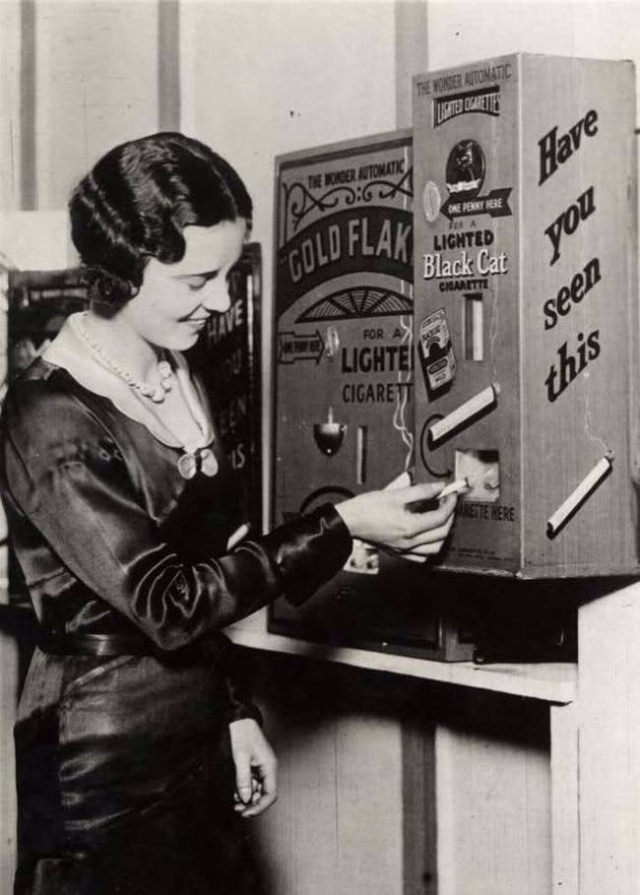
A woman in a satin dress leans toward a chunky, boxy vending machine, smiling as she reaches for a cigarette from the dispenser’s slot. Bold lettering across the front advertises “LIGHTED CIGARETTE,” while a nearby panel teases onlookers with “Have you seen this,” turning the contraption into both sales pitch and sideshow. The whole setup feels like an early experiment in self-service convenience—part gadget, part spectacle—designed to stop passersby in their tracks.
The title’s claim is the hook: a penny could buy not just a cigarette, but one already lit, delivered by a mechanism that promised speed and novelty. Branding and instructions crowd the machine’s face, suggesting operators knew the idea needed explanation as much as it needed advertising. Watching the user’s hand hover at the opening, you can almost sense the small thrill of trusting a machine to do something usually done with a match and a moment’s pause.
As a piece of invention-era marketing, the photo offers a compact lesson in how consumer technology tried to make everyday habits more automatic, more public, and more impulse-friendly. For anyone interested in vintage vending machines, early automation, or the history of smoking culture, this odd “lit cigarette for a penny” device is a striking example of innovation aimed at shaving seconds off routine. It’s also a reminder that the past’s clever conveniences could be as startling as they were commonplace.