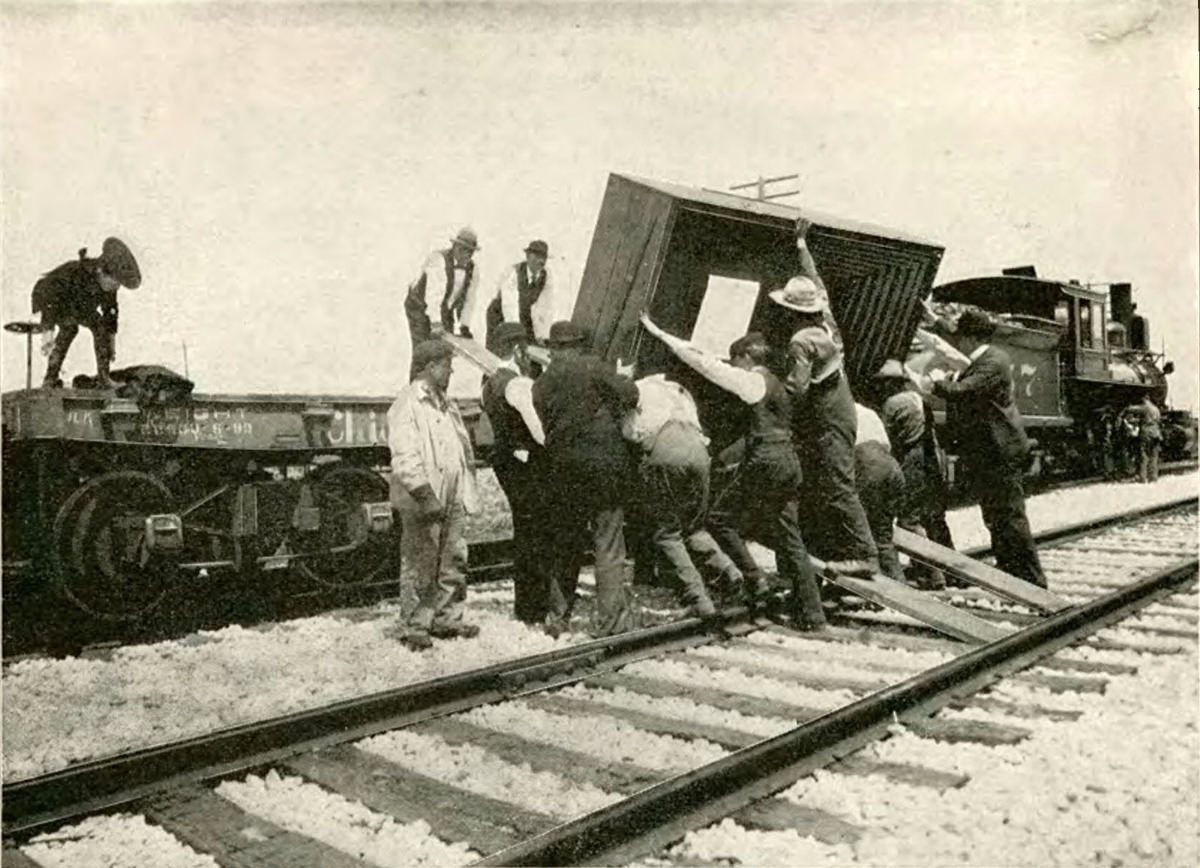
Muscle, timber, and steam meet on a stretch of track as a crew wrestles a huge wooden camera body toward a flatcar. Several men brace their shoulders against the boxy apparatus while others guide from above, turning the loading job into a coordinated push-and-pull. In the background, a locomotive waits with its tender and cab in view, reminding us that rail transport was the backbone of moving heavy equipment from place to place.
What stands out is the sheer scale of the photographic invention on display: this is no handheld camera, but a large-format rig built for precision, with a broad panel and a hooded opening that hints at lenses and plates. The makeshift ramp and the careful positioning suggest that a single bump could ruin delicate parts, so the operation demands both strength and caution. Clothing details—work shirts, suspenders, brimmed hats—add a grounded sense of everyday labor surrounding advanced technology.
Railways didn’t just carry passengers and freight; they helped circulate new ideas, machines, and the people determined to document their era. “Loading the camera onto the train” captures a transitional moment when photography depended on bulky apparatus and teamwork, yet promised unprecedented ways to record industry and travel. For readers browsing inventions and early photography history, the scene offers a vivid reminder that innovation often arrived on a timetable, bolted to rails, and hauled by many hands.