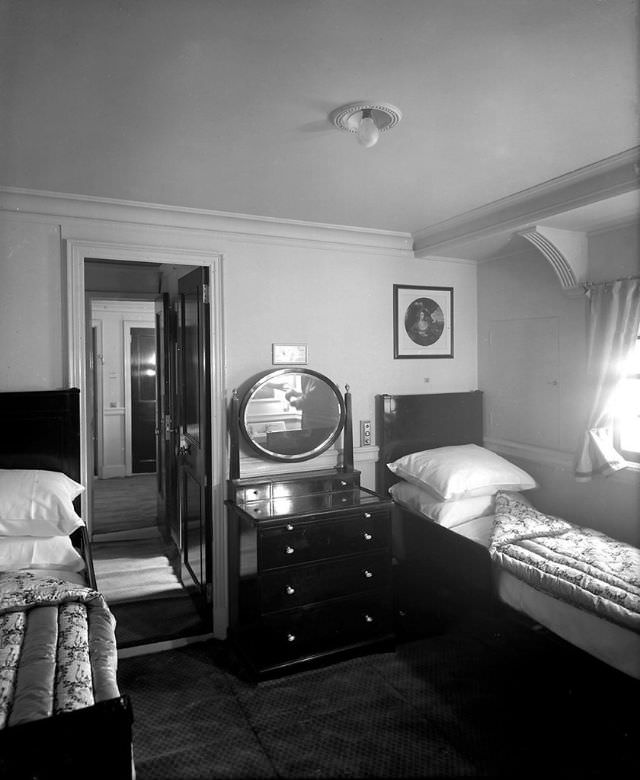
Quiet symmetry defines 1st Class suite C102 aboard the RMS Aquitania in May 1914, where two neatly made single beds face a polished chest of drawers topped with an oval mirror. The scene feels carefully staged for inspection: crisp linens, patterned coverlets folded with precision, and a carpet that softens the hard geometry of woodwork and bulkhead. Even the ceiling light and framed wall decoration reinforce a sense of orderly comfort designed to reassure ocean travelers.
Details around the room hint at how luxury at sea borrowed from fashionable hotels while adapting to a ship’s practical constraints. The built-in curves and trim, the snug spacing between furnishings, and the heavy door leading to an adjoining passage show how designers balanced elegance with stability and efficient use of space. On the right, daylight presses through the curtained porthole, reminding the viewer that this refined bedroom belonged to a moving world of salt air, engine vibration, and shifting horizons.
As a historical photo of Aquitania’s first-class accommodations on the eve of 1914’s upheavals, the suite stands as a small museum of early twentieth-century travel and “modern” convenience. It speaks to a moment when transatlantic liners marketed privacy, cleanliness, and tasteful décor as part of the journey itself, not merely a means to an end. For anyone exploring ocean liner history, Edwardian interiors, or Cunard’s famed shipboard comfort, this view of suite C102 offers an intimate, grounded glimpse of what first-class meant in its everyday reality.