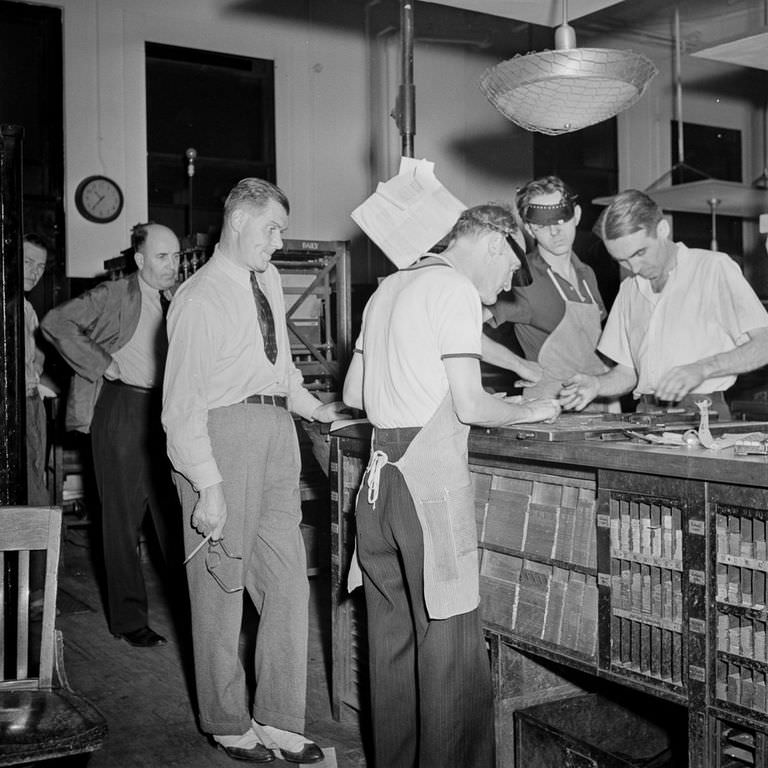
Deadline pressure hangs in the air as several men cluster around a long workbench, sleeves rolled, eyes fixed on the task of assembling a newspaper’s page one. The room feels like a crossroads between craft and industry: careful hands sorting and aligning materials while others hover nearby, waiting for the next decision. A wall clock and the tight grouping of bodies hint at minutes being counted, not just measured.
Along the counter, shallow drawers and compartments suggest a print shop organized for speed, where every tool has its place and every delay ripples outward. The central action reads like traditional paste-up or layout work—physical, tactile steps that once stood between reporting and the morning edition. Overhead lighting throws sharp shadows, emphasizing concentration and the small choreography of passing items, checking alignment, and making last-second fixes.
For readers drawn to the history of inventions and media technology, the scene offers a grounded look at how news was literally built before digital publishing took over. It’s a snapshot of newsroom labor that rarely makes the front page itself: the craftsmen and editors who translated information into a finished product under relentless time constraints. “Page one is made up as the deadline approaches” becomes more than a title here—it’s a reminder that the modern news cycle rests on generations of meticulous, hands-on production.