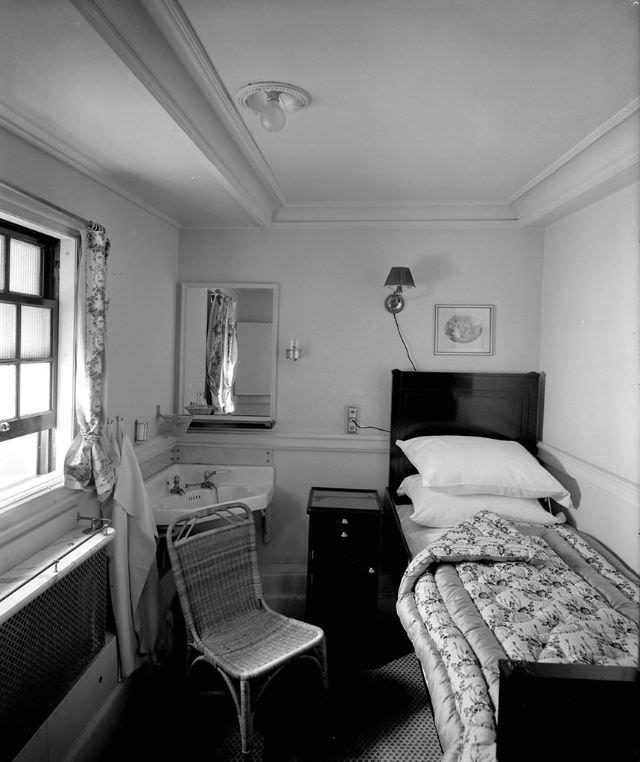
Stepping into Aquitania’s 1st Class cabin C24 feels like entering a carefully planned private retreat at sea, scaled for a solo traveler who still expected comfort. A narrow bed with a neatly layered quilt and stacked pillows dominates the right side, while a small bedside cabinet keeps essentials close. Overhead, crisp ceiling moldings and a simple light fixture hint at the Edwardian taste for restrained elegance rather than excess.
Along the left wall, the “outside single” designation comes to life through the window, framed by patterned curtains that would have softened the shipboard light and the sound of the ocean beyond. A wicker chair sits ready for reading or quiet reflection, and the built-in radiator cover below the sill suggests the practical attention given to warmth and ventilation on an Atlantic crossing. The room’s clean lines and tight layout show how first-class luxury could be expressed through order, privacy, and thoughtful fittings.
Near the back, a compact washstand with a mirror brings daily routines into the frame, underscoring how modern these accommodations were for May 1914. The visible plumbing, tidy ledges, and wall-mounted lamp speak to the era’s confidence in “inventions” and conveniences—electric lighting, onboard sanitation, and standardized cabin design—packaged for elite travel. As a historical photo, it offers a revealing glimpse of Cunard’s Aquitania just before the world changed, when the promise of ocean liner travel rested on quiet rooms like this one.