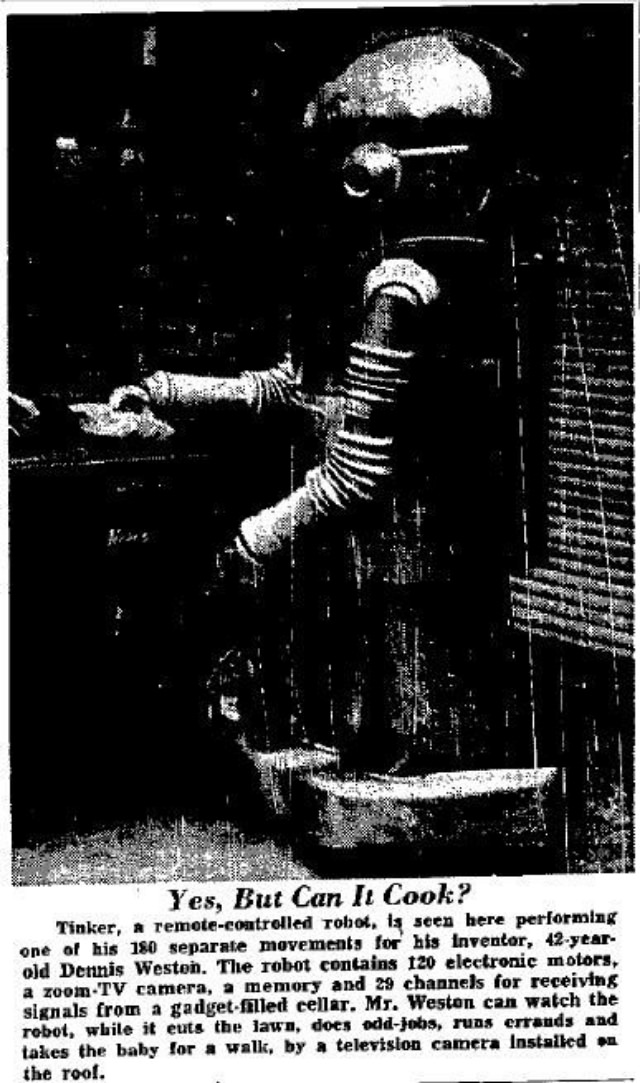
A helmeted, human-shaped machine leans forward with an outstretched arm, its segmented “sleeves” and bulky torso hinting at the era’s fascination with visible mechanics. Beneath the grainy print runs a cheeky caption—“Yes, But Can It Cook?”—the kind of skeptical humor that often accompanied mid-century promises of domestic automation. Even in this rough reproduction, the photo sells a bold idea: a household helper built from metal, wires, and ambition.
In the story suggested by the title, Tinker the Robot stands as a 1966-era vision of the future, when remote control and television-era electronics were imagined as the next step toward a hands-free home. The attached text describes a machine designed for practical chores—odd jobs, errands, and watchful assistance—positioning “real-life” robotics not as science fiction, but as an invention meant to be demonstrated and improved. That blend of engineering optimism and everyday usefulness makes the image a compelling artifact of vintage technology history.
What makes this historical photo so SEO-friendly for readers interested in retro inventions is its clear connection to perennial questions about robots and housework: can a machine truly replace human labor, or does it merely perform a narrow set of tasks well? Tinker’s promise, framed in 1960s language and presentation, echoes today’s conversations about smart homes, robot assistants, and the long road from prototype to practical helper. The result is a snapshot of technological hope—equal parts ingenuity, spectacle, and the lingering doubt packed into that one unforgettable line about cooking.