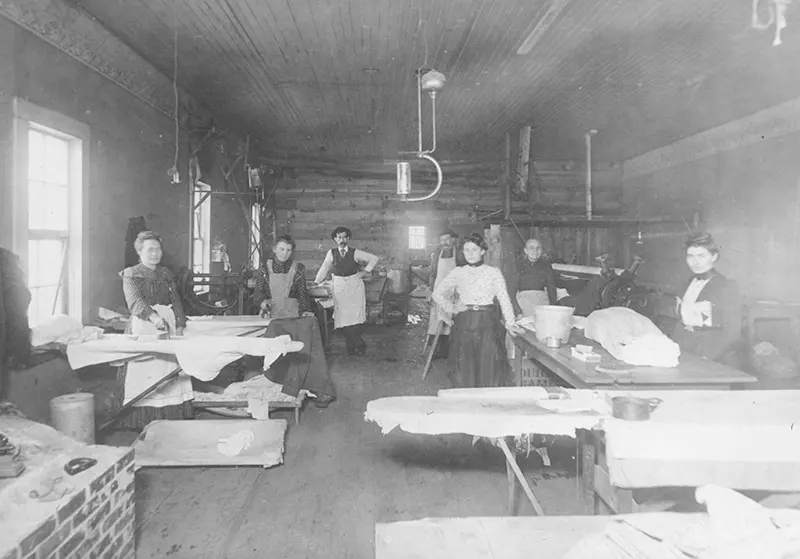
Inside the Model Steam Laundry in Colfax, Washington, the workroom stretches back beneath a high, plank ceiling, lit by tall windows and a single hanging fixture. Long wooden tables dominate the foreground, piled with light-colored linens and garments caught mid-process, while brickwork and rough boards hint at a building designed for heat, moisture, and constant use. The arrangement feels practical and industrial, a small-town interior built around efficiency rather than display.
Several workers pose among the stations, their aprons and workwear blending into the everyday tools of the trade—baskets, tubs, and stacks of cloth waiting to be pressed or folded. The title’s nod to “steam” and “inventions” comes alive in the background: pipes, frames, and equipment suggest the muscle of the operation, where hot water and steam power shortened the drudgery that laundry once demanded at home. Even without motion, the scene implies a steady rhythm of sorting, washing, ironing, and finishing.
For anyone searching local history of Colfax or the story of early steam laundries in Washington state, this 1900 photograph offers a grounded look at a service that touched nearly every household and business. It also speaks to changing labor patterns at the turn of the century, when mechanized cleaning and pressing turned domestic necessity into a commercial craft. The Model Steam Laundry stands here as both workplace and technological snapshot, capturing how ordinary clothing care became part of a modernizing town.