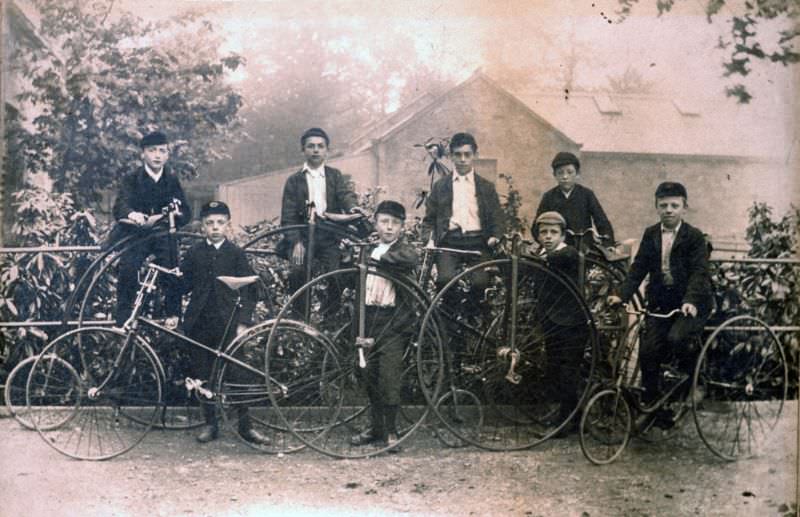
Boys in caps and dark jackets gather in a quiet yard, their faces serious as they cluster around an improbable fleet of bicycles. The towering front wheels and tiny rear wheels of the penny-farthing dominate the scene, turning each rider into a careful balancing act before the first pedal stroke even begins. Behind them, modest buildings and leafy branches soften the industrial edge of the machines, hinting at how quickly this new pastime found its way into everyday life.
What stands out is the variety: different frame shapes, handlebar styles, and wheel sizes suggest experimentation in an era when cycling inventions were still being tested on real roads by ordinary enthusiasts. These high-wheelers weren’t just transportation; they were statements of modernity, engineering bravado, and youthful daring, demanding skill, confidence, and no small amount of nerve. Even at rest, the bicycles look fast—and a little risky—like prototypes of freedom lined up for inspection.
For readers drawn to vintage cycling photographs, this moment offers a grounded look at the penny-farthing era beyond posters and mythology. The composition quietly documents early bicycle culture as a social activity—friends posing with prized machines, clothing chosen for respectability, and a setting that feels both domestic and forward-looking. It’s a timeless reminder that every leap in mobility began with communities gathering around new ideas, turning invention into lifestyle one ride at a time.