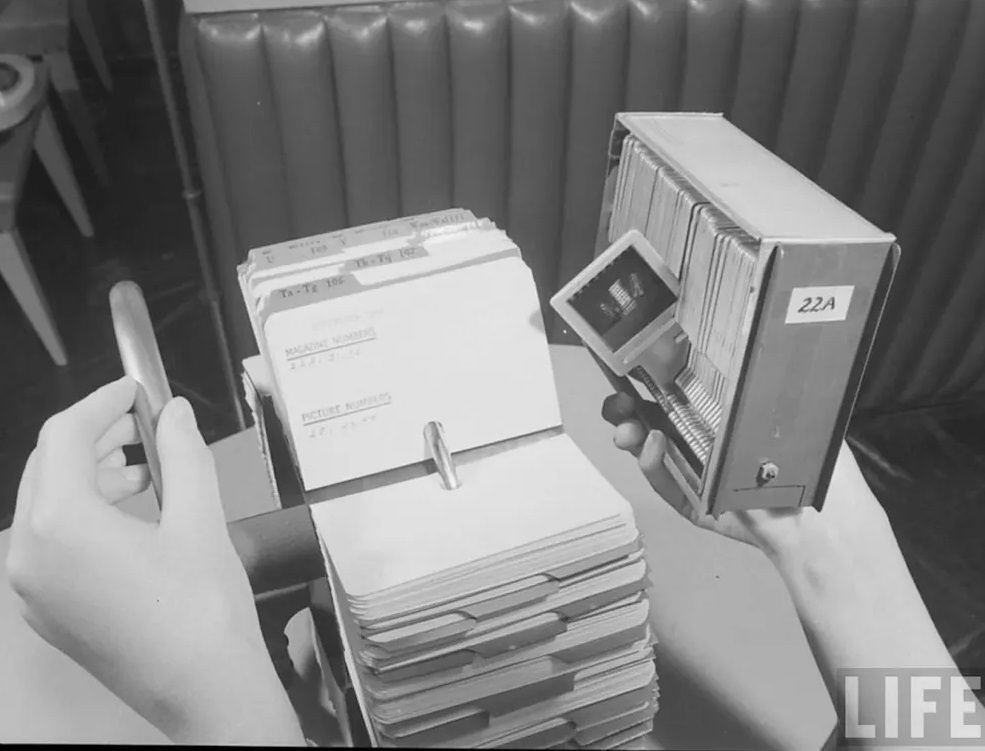
Long before web browsers and shopping carts, retailers experimented with “online” shopping using the tools of their day—telephones, catalogs, and rudimentary screens. In this photo, hands hold a small viewing device aimed at a dense file of product cards, hinting at a system where inventory could be browsed visually without walking aisles. The scene feels like a crossroads between office filing culture and consumer convenience, an early attempt to make buying faster through technology.
A labeled box of slides or cards sits beside a thick, tabbed index, suggesting how much manual organization powered these futuristic promises. Instead of pixels and databases, shoppers and staff relied on physical media: cards to identify goods, slides to display them, and a handheld viewer to bring the merchandise “to the screen.” It’s a reminder that pre-internet innovation often meant grafting new interfaces onto old storage methods, turning clerical equipment into retail machinery.
For anyone curious about the history of e-commerce, this pre-internet online shopping store concept shows that the desire to order from a screen didn’t begin in the 1990s. The company could take selections made through this system and ship products to customers, echoing the same fulfillment model used by today’s online retailers. Seen now, the contraption is both quaint and visionary—a tangible ancestor of modern online shopping, proving that the future was being rehearsed in analog form.