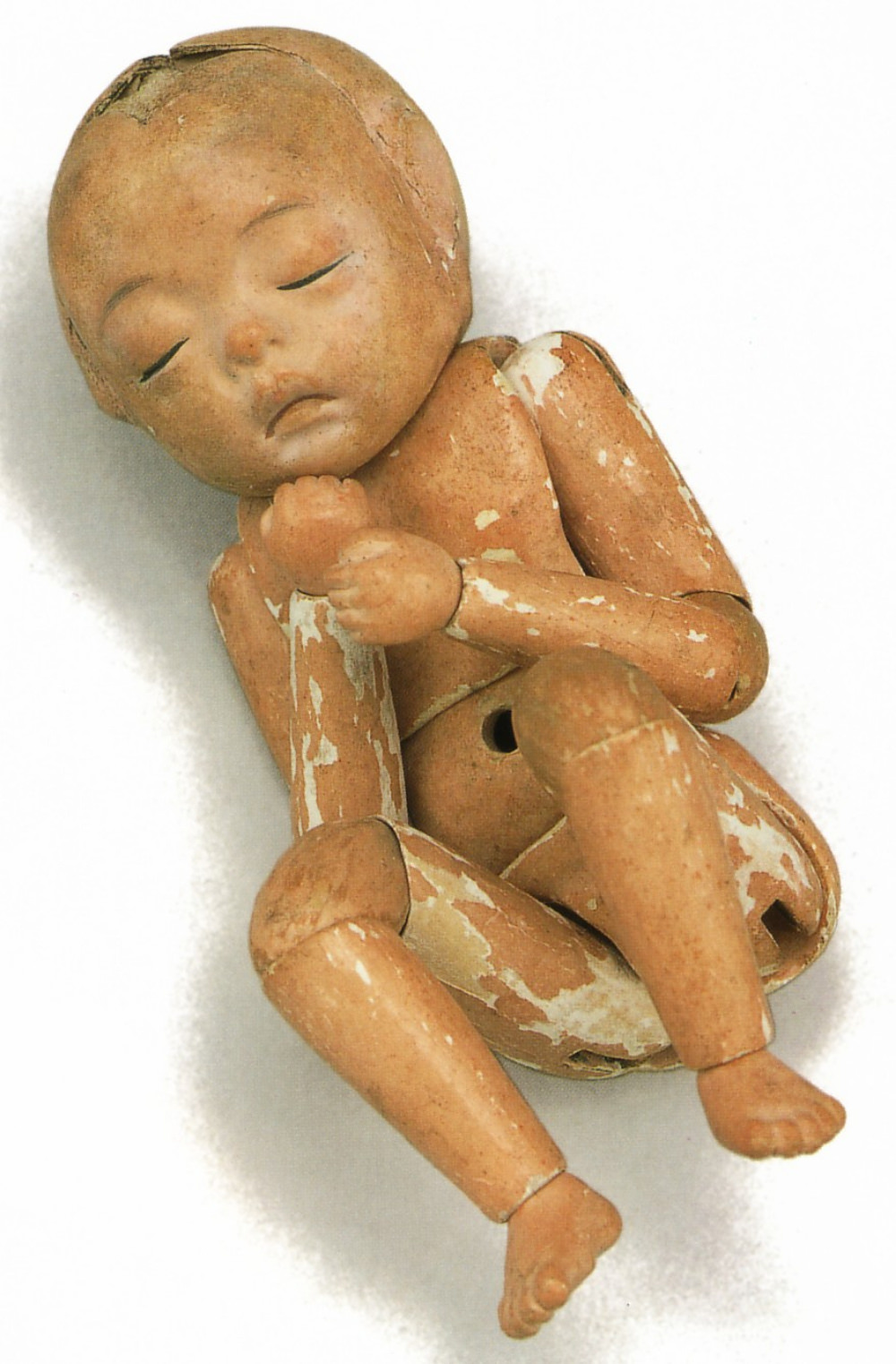
Resting in a curled, sleeping pose, the small Japanese doll in this post carries the quiet intimacy of handmade objects that have outlived their original audiences. Its surface is worn and flaking, revealing years of handling, while the segmented limbs and softly painted features suggest a figure meant to be posed, displayed, and examined up close. Even without context, the craft details—jointed arms and legs, a rounded torso, and an unmistakably human tenderness—pull the viewer toward questions about what it represented and why it was made.
Edo-period popular entertainment often blended curiosity, spectacle, and commerce, and “pregnancy dolls” sit at that intriguing crossroads in the history of Japanese sideshow attractions. Such figures were marketed as novelties and conversation pieces, trading on fascination with the hidden interior of the body and the mysteries of reproduction, at a time when medical knowledge and public display could overlap in uneasy ways. Seen through that lens, the doll’s construction and pose feel less like a simple toy and more like an “invention” of display culture—an object designed to provoke wonder, unease, and storytelling in equal measure.
Look closely and the wear becomes part of the narrative: chipped pigment, scuffed edges, and the plain, utilitarian joints that prioritize motion over polish. For collectors and history readers alike, artifacts like this offer a rare peek into everyday curiosities that rarely make it into formal chronicles of 19th-century Japan, yet shaped how people talked about bodies, birth, and belief. Whether approached as folk craft, early anatomical novelty, or Edo-era spectacle, the pregnancy doll remains a striking reminder that popular culture has long found inventive ways to make the unseen visible.