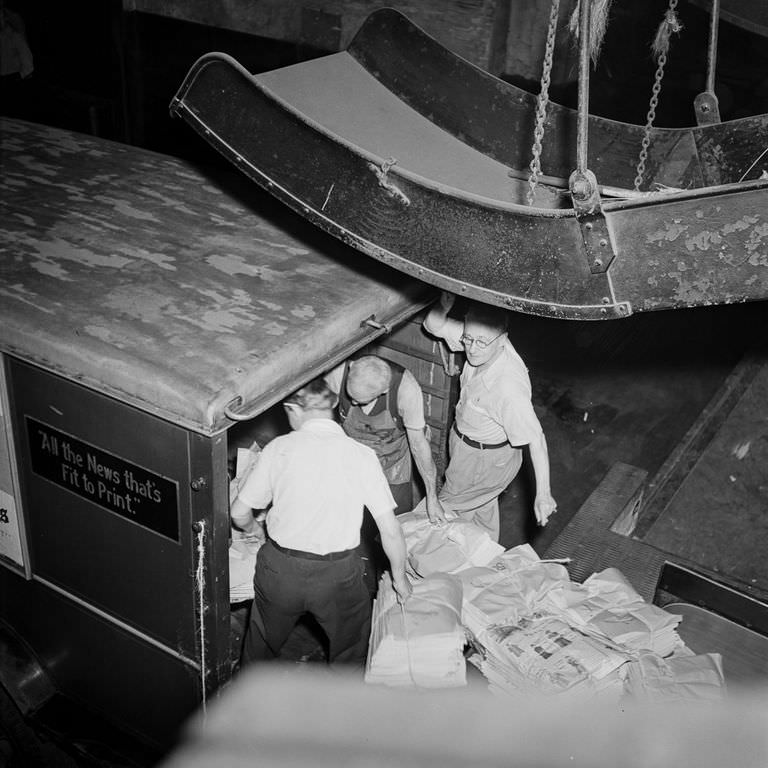
Under the shadow of a curved metal chute and dangling chains, bundles of freshly printed newspapers are being manhandled into the back of a waiting truck. The men work shoulder-to-shoulder in a cramped loading bay, lifting stacks wrapped in paper and twine while the vehicle’s roof and side panel crowd the frame. A slogan on the truck reads, “All the News that’s Fit to Print,” anchoring the scene firmly in the world of big-city news distribution.
There’s an industrial rhythm here: paper flows from pressroom to dispatch with the help of gravity, muscle, and a bit of mechanical ingenuity. The chute suggests a system designed to move heavy loads quickly, turning piles of newsprint into orderly shipments headed for street corners, stations, and storefronts. Details like rolled sleeves, work caps, and the tight staging emphasize the physical logistics behind what readers experience as a simple morning routine.
Papers are loaded onto a truck for distribution, and the title says it plainly—but the photograph hints at a larger story about communication, labor, and the speed of information in the print era. Before digital alerts and scrolling feeds, the news traveled on wheels, timed to editions and delivery routes, dependent on crews who kept the pipeline moving. For anyone researching newspaper history, printing technology, or urban commerce, this moment captures the overlooked infrastructure that carried headlines into everyday life.