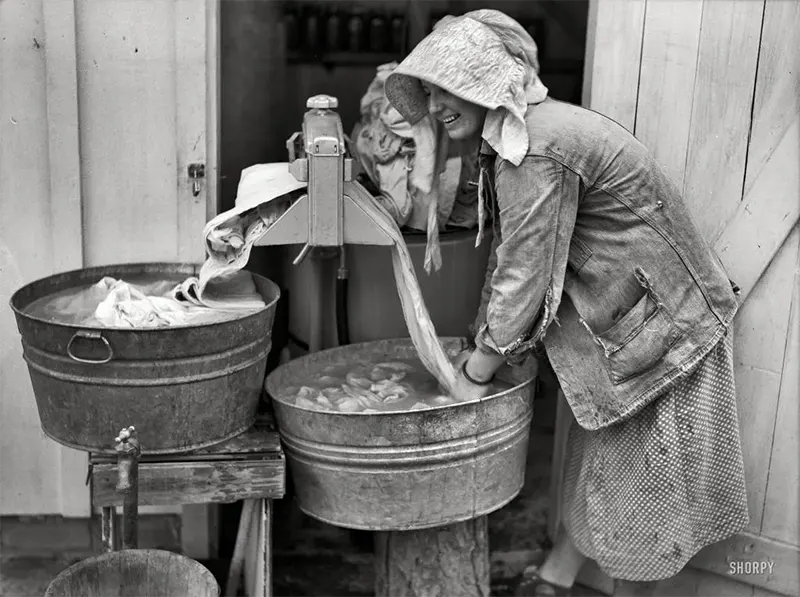
Leaning over a galvanized tub, a laundry worker in a brimmed hat and sturdy work clothes wrings wet fabric through a hand-operated attachment while sudsy water sloshes below. A second basin waits nearby, suggesting the familiar rhythm of soak, scrub, rinse, and repeat—an exhausting routine that shaped daily life long before push-button convenience. Details like the utilitarian tubs, simple plumbing, and rough outdoor workspace underline how much early washing relied on muscle, improvisation, and patience.
Across the 1880s to the 1950s, washing machine inventions didn’t arrive as one sudden miracle; they emerged as a chain of practical solutions to age-old drudgery. Early wringers and agitators aimed to save hands from abrasion and backs from constant bending, even if they introduced new hazards and demanded careful attention. Photographs like this help trace the transition from washboard-era labor to the gradual mechanization that brought laundry into a new domestic and commercial age.
For readers exploring the history of washing machines, this post offers a photographic journey through the tools that bridged manual washing and modern appliances. The scene invites you to notice the engineering in everyday objects—metal tubs, rollers, and simple frames—designed to speed up a task that once consumed entire days. As you move through these early laundry innovations, the story becomes as much about social change and household work as it is about invention itself.