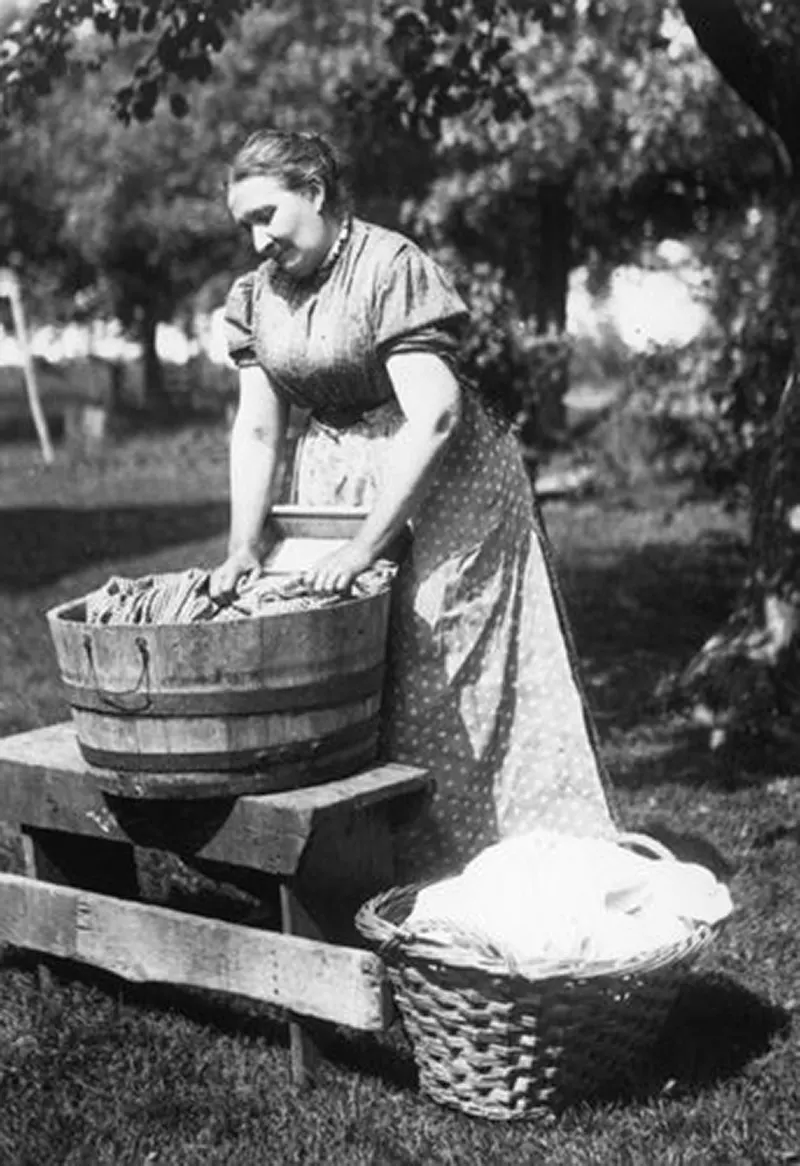
Beneath the shade of trees, a woman leans over a large wooden wash tub set on a rough outdoor stand, hands deep in fabric as she works through a heavy load. A wicker basket brims with more laundry at her feet, and the scene quietly explains why early washing “systems” were often just muscle, water, and time. Details like the sturdy barrel-like basin and the open-air setup evoke an era when wash day was a full-bodied chore rather than a background task.
From that kind of backyard labor grew a long line of washing machine inventions, each promising to shave minutes—and strain—off an exhausting routine. Early hand-powered mechanisms, wringers, and improved tubs tried to tame the same problem seen here: moving water through cloth efficiently without wearing out the person doing it. As electrification and modern manufacturing spread, the messy, manual rhythm of washing began shifting indoors, turning a once communal, weather-dependent job into something increasingly standardized and mechanized.
Along the way, photographs like this become more than nostalgia; they’re evidence of how domestic technology changed everyday life between the late 19th century and the mid-20th century. The textures of wood, woven basketry, and sunlit yard frame the human cost that early washing machines were designed to reduce. Browse the full post for a photographic journey through the early days of washing machines, tracing the path from hand-washed loads to the home appliances that reshaped household work.