Seaside leisure in the Victorian era came with rules, rituals, and plenty of ingenuity, and bathing machines sit right at the crossroads of all three. These wheeled changing huts were designed to roll into the shallows so swimmers could enter the water with a measure of privacy, reflecting the strict modesty expected at popular beaches. The collection in “Going Swimming On Wheels” explores how a simple idea—taking the changing room to the sea—reshaped coastal holidays and the look of the shoreline.
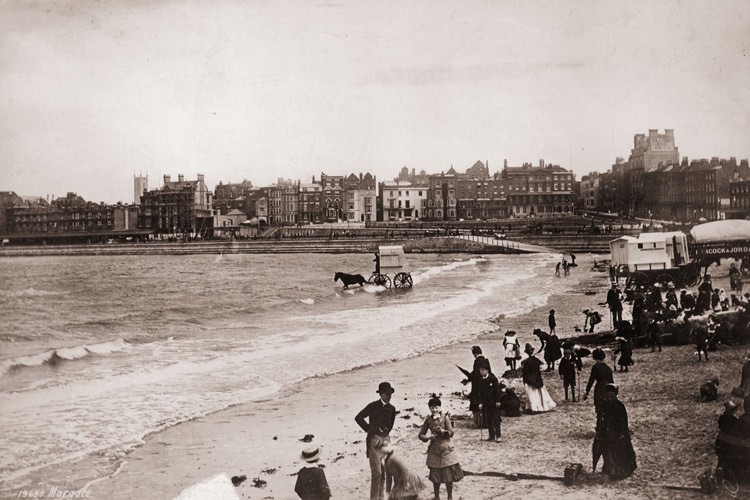
Along the surf line, horse-drawn bathing machines appear like tiny cottages on wheels, edging toward the waves while promenaders and onlookers gather on the sand. In the background, a dense row of seaside buildings anchors the scene, hinting at a thriving resort economy built around day-trippers, boarding houses, and the promise of sea air. Clothing styles and crowded beach activity underline how going for a swim was as much a public outing as it was a personal plunge.
From an invention standpoint, bathing machines are a fascinating snapshot of transitional technology—part carriage, part cabin, part social compromise—used for decades before changing swimwear and shifting attitudes made them obsolete. Browsing these historic photos offers more than nostalgia: it reveals how design responds to etiquette, commerce, and the changing meaning of recreation. If you’re interested in Victorian beach culture, early seaside tourism, or the history of swimming, this gallery provides a vivid, searchable window into an era when even entering the ocean required wheels.