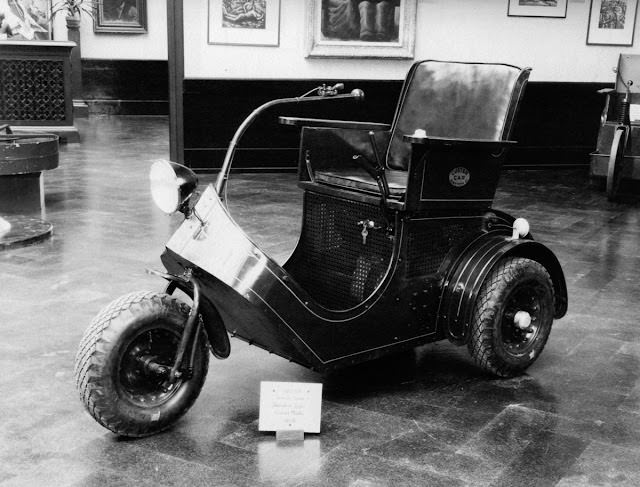
Oddly charming at first glance, the Custer Chair Car sits like a three-wheeled promise from the Roaring ’20s—part motorcycle, part miniature automobile, and entirely devoted to practicality. The enclosed passenger seat, upright windscreen, and single headlamp hint at a world newly in love with personal mobility, when inventors chased the dream of making travel cheaper, simpler, and more accessible. Even indoors on a polished floor, it reads as a ready-to-go urban runabout, engineered for tight streets and everyday errands.
Details in the design reward a closer look: a sturdy front wheel paired with two rear wheels, a low-slung body, and a compact cabin that prioritizes comfort and protection over speed. The woven paneling, curved metalwork, and small-scale proportions suggest careful craftsmanship aimed at mass appeal, not mere novelty. In an era when motorcycles demanded balance and automobiles demanded money, inventions like this tried to bridge the gap—offering stability, a sheltered ride, and the thrill of modern engineering in one compact package.
Behind the mechanics lies the bigger story that makes the Custer Chair Car feel like a beacon of hope: the belief that technology could improve daily life one clever idea at a time. This historical photo invites readers to imagine the bustle of 1920s streets, the rise of consumer innovation, and the experimental spirit that filled workshops and showrooms. For anyone exploring vintage transportation, Roaring ’20s inventions, or early mobility design, this unusual vehicle is a memorable reminder of how the future was once built in bold, practical steps.