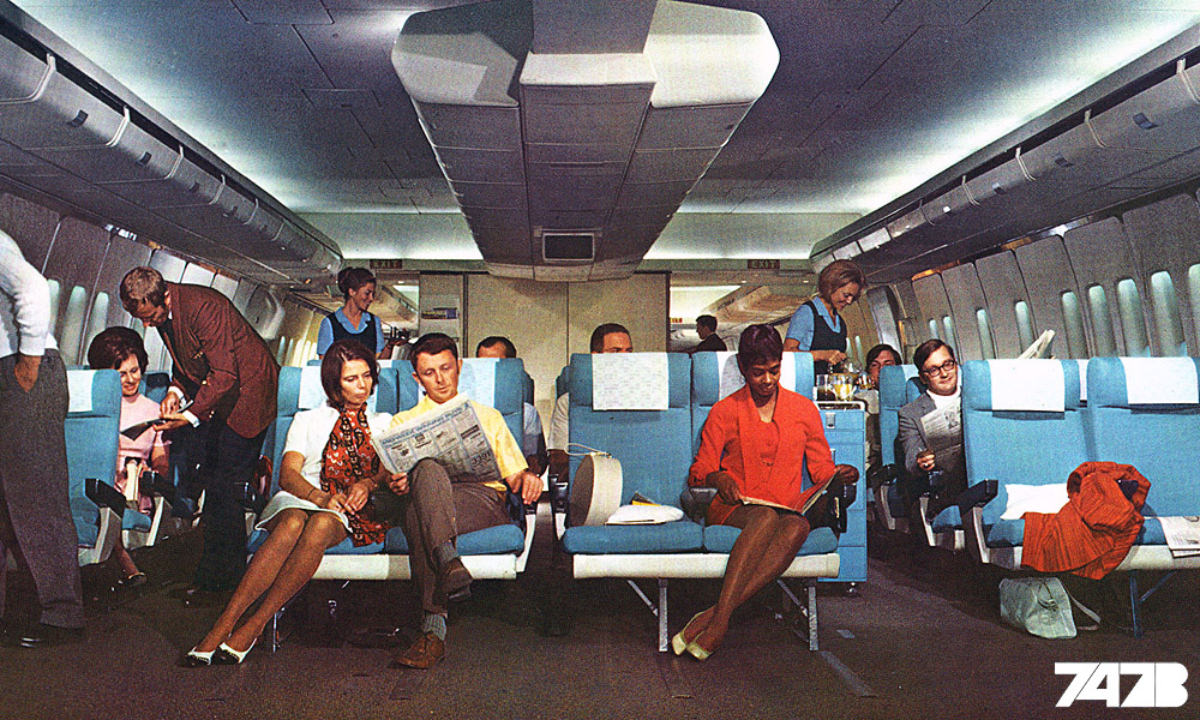
Jet-age optimism fills the cabin as passengers settle into wide blue seats beneath the new, high-ceilinged interior that made the Boeing 747 feel more like a lounge than a narrow tube. Flight attendants move through the aisles while travelers read newspapers, chat, and stretch out with an ease that earlier airliners rarely allowed. Even the simple details—spacious rows, generous overhead bins, and that unmistakable early-1970s styling—hint at an aircraft designed to make long-haul travel feel routine.
January 22, 1970 marked the start of the 747’s first scheduled service from New York to London, a milestone often remembered as the moment the “jumbo jet” truly entered everyday life. By carrying far more people across the Atlantic in a single trip, the 747 helped airlines rethink capacity, pricing, and what comfort could look like at cruising altitude. The route itself symbolized modern connectivity: two global cities linked by a machine built to shrink oceans into an overnight journey.
Looking closely at this scene, you can sense the transition from exclusive air travel to a broader, more accessible era, where the cabin became a social space and the flight a shared experience. For aviation history fans, this photo is a snapshot of the Boeing 747’s early identity—part technological leap, part cultural statement—at the dawn of mass international air travel. It’s an enduring reminder of how one aircraft reshaped the rhythm of travel between New York and London and set the template for the long-haul flights that followed.