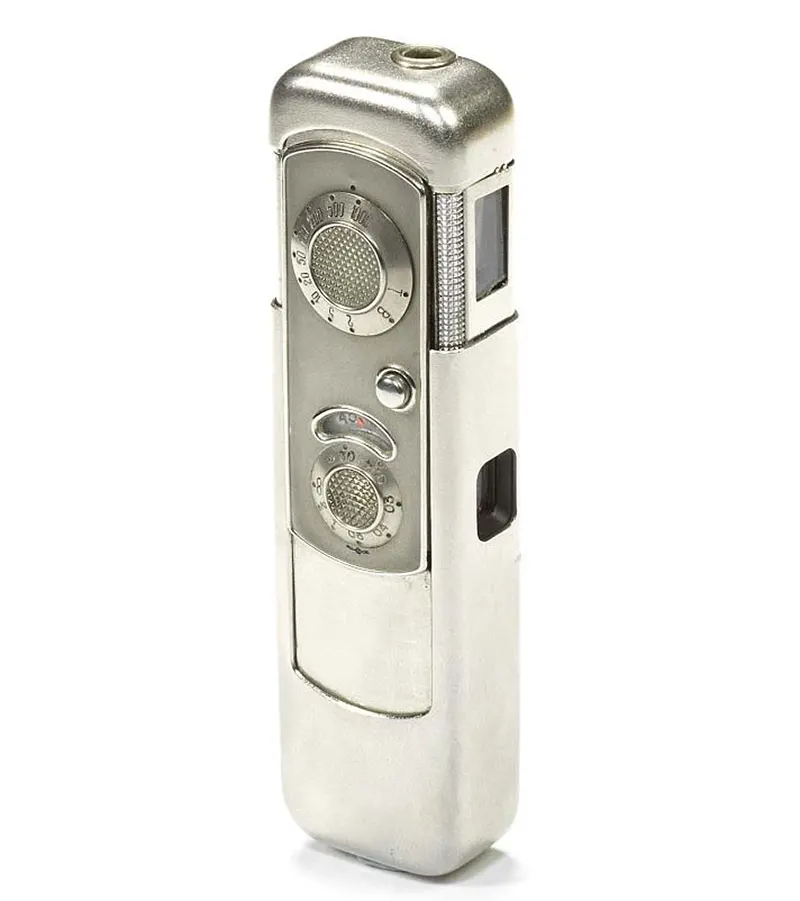
At first glance, the object could pass for a pocket radio: a slim metal body, a rounded “top,” and a faceplate dressed with dial-like circles that mimic tuning controls. Look closer and the illusion becomes the point—this is a Minox camera in disguise, engineered to look ordinary while hiding its real purpose. The clean, silvery finish and compact proportions speak to an era when industrial design could be both stylish and sly.
Along the side, a small window hints at the camera’s true function, breaking the radio masquerade just enough for someone who knows what to look for. The faux speaker grilles and numbered dial details aren’t just decoration; they’re deliberate camouflage, turning photography into something that can be carried in plain sight. As an “inventions” story, it’s a reminder that innovation isn’t always about adding features—sometimes it’s about hiding them.
Minox cameras have long been associated with miniature photography, and this radio-style housing captures why such devices became icons of concealment and curiosity. Whether viewed as a clever gadget, a collectible piece of espionage-era design, or simply an example of creative engineering, the disguised Minox invites questions about how technology and everyday objects blur together. For readers interested in vintage cameras, hidden cameras, and the history of clever disguises, this photograph offers a compact lesson in misdirection.