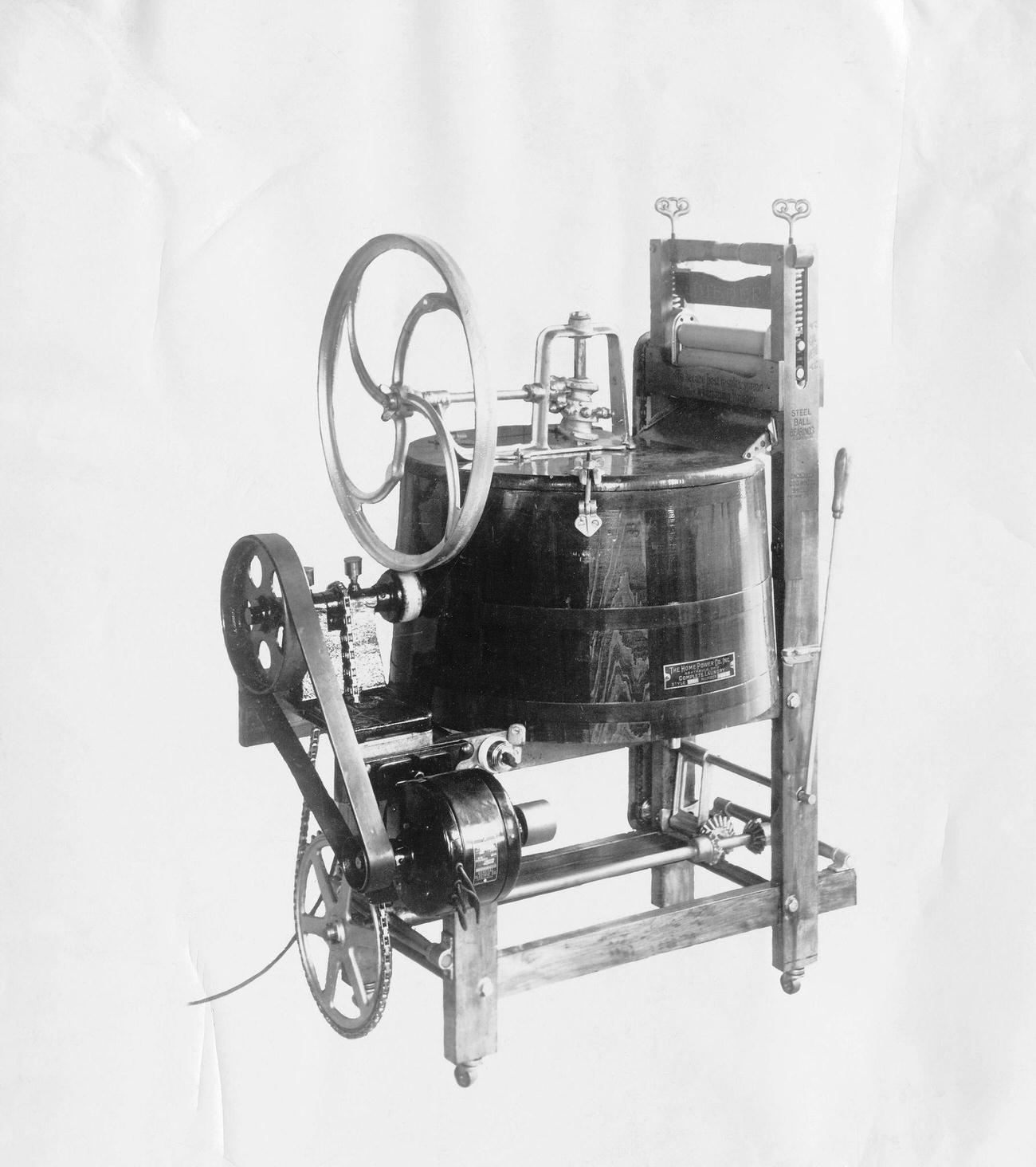
Sturdy and openly mechanical, this early General Electric washing machine looks more like workshop equipment than a modern appliance, with its exposed belts, gears, and large flywheel ready to put muscle behind a household chore. The wooden tub sits in a rigid frame, while a compact electric motor below hints at the moment when home life began borrowing power and design cues from the factory floor. Even at a glance, the message is clear: laundry was being reimagined as an engineering problem that could be solved with motion, torque, and reliable electricity.
Details in the photo reward a closer look, from the heavy-duty linkage that transfers power to the wash mechanism to the tall wringer assembly mounted at the side for pressing water from clothes. Hardware that would later be hidden behind sleek panels is proudly visible here, suggesting an era when “electric” was a selling point and consumers wanted to see the technology they were paying for. The combination of wood, metal fittings, and industrial-style components places this machine squarely in the transitional period between hand-powered wash tubs and the enclosed, automated washers that would define mid-century domestic life.
For collectors, design historians, and anyone interested in the history of inventions, the image offers a sharp reminder that labor-saving devices didn’t arrive fully formed—they evolved through practical, sometimes imposing machines like this one. Early General Electric washing machine designs helped normalize the idea of electrified housekeeping, shifting laundry from an all-day physical ordeal toward a more manageable routine. As a piece of appliance history, it captures the ambition of early home technology: making everyday work faster, more consistent, and increasingly powered by the growing reach of electricity.