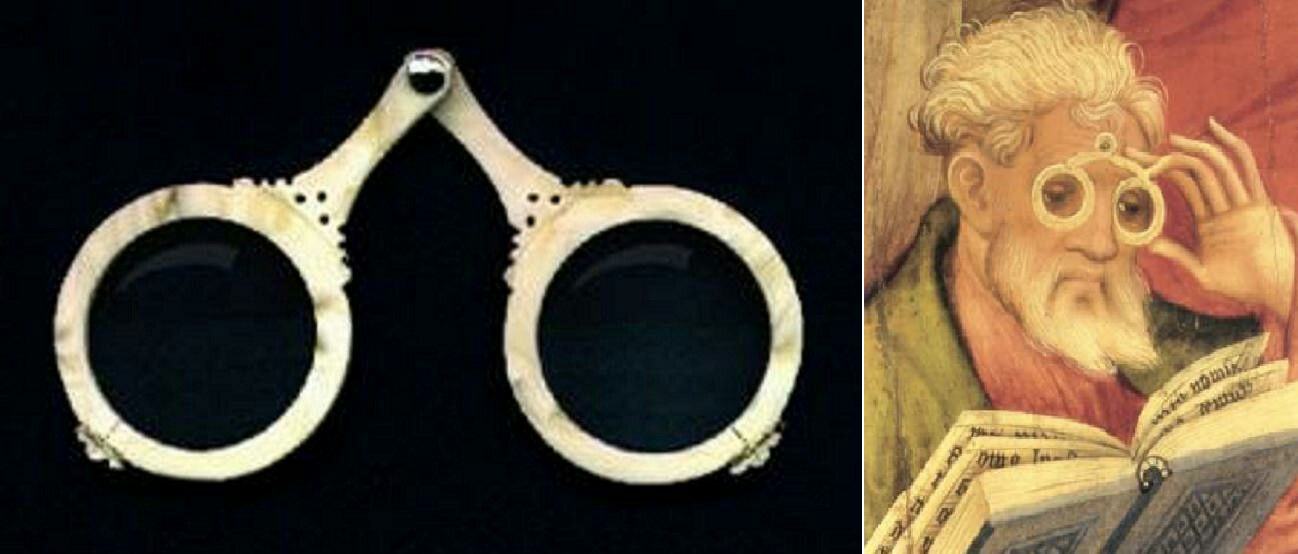
Two round lenses linked by a simple bridge sit against a dark ground, their pale frames punctuated by small rivet holes that hint at early, hands-on craftsmanship. Alongside them, a painted reader peers down at an open book through similarly circular spectacles, one hand lifting the frames as if to catch the clearest line of text. Together, these visuals underline why spectacles belong in any discussion of medieval inventions: they are modest objects with outsized cultural impact.
The post title, “Spectacles (1286) by Salvino D’Armate,” points to the long-running tradition that connects early eyeglasses to Italian origins, a story often repeated in popular histories of vision. Whether approached as legend, attribution, or milestone, the idea matters because it frames spectacles as a turning point in how people worked and learned. Reading, copying manuscripts, and close-up craft could continue longer into adulthood once magnified sight became wearable.
Look closely and the design feels worlds away from modern eyewear: no temples over the ears, no lightweight plastics, just paired circles meant to be held or balanced while the page comes into focus. That physical awkwardness is part of the charm, reminding us how invention often begins with a workable solution rather than a perfected one. For anyone interested in the history of glasses, the evolution of lenses, or the broader history of technology, this image offers an evocative doorway into the moment when written knowledge became easier to see.