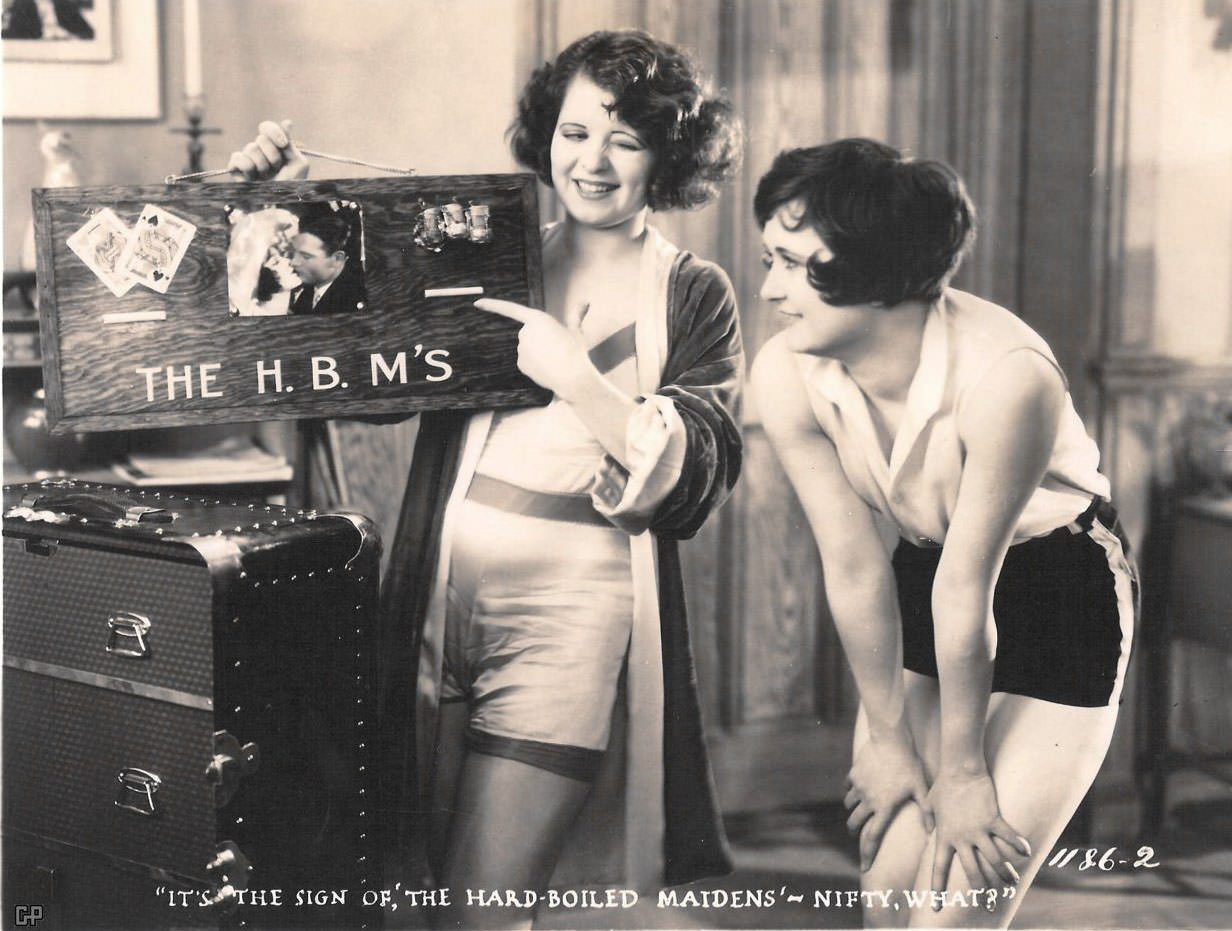
Clara Bow flashes a mischievous smile while holding up a wooden sign labeled “THE H.B.M’S,” as Alice Adair leans in with an amused, conspiratorial look in this publicity still from *The Wild Party* (1929). The set dressing is wonderfully specific: a large travel trunk, a pin-up style photograph tacked to the board, playing cards, and a tiny row of miniatures that read as trophies of a night out. A caption along the bottom—“It’s the sign of the hard-boiled maidens—nifty, what?”—leans into the slangy, modern voice audiences associated with Bow’s screen persona.
The fashions do a lot of the storytelling on their own, balancing playful provocation with the casual confidence of the late 1920s. Short, waved hair and sleeveless silhouettes signal youthful independence, while the robe and lingerie-like costume elements suggest a backstage or dorm-room intimacy rather than a formal drawing-room scene. Even without a precise plot summary in view, the staging hints at a clubby in-joke—an inside society, a private code, and a pair of women in on the fun.
For readers browsing classic Hollywood history, this image is a tidy snapshot of pre-Code energy as sound cinema took hold: flirtatious, witty, and eager to advertise modern attitudes. It also works as a reminder of how studios sold their films through character-forward stills—props, poses, and punchy text designed to communicate tone at a glance. Whether you’re collecting silent and early talkie memorabilia or exploring Clara Bow’s transition into late-1920s movies, this still from *The Wild Party* offers a lively, SEO-friendly window into the era’s screen culture.