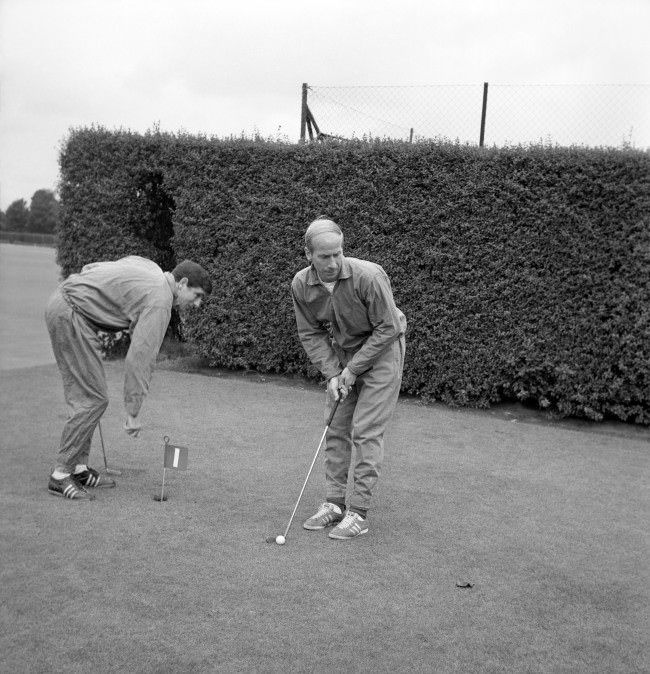
On a quiet patch of green at Roehampton in London, Bobby Charlton takes a measured stance over a short putt, dressed in casual training gear rather than a football kit. A teammate lingers nearby, bent toward the cup as if checking the line, while clipped hedges and a simple practice flag keep the scene spare and intimate. The mood is calm, almost domestic—an athlete’s concentration transplanted from stadium noise to a small circle of trimmed turf.
The title places this moment on the eve of the 1966 World Cup final against West Germany at Wembley, and the contrast is striking. Golf here reads as recovery and routine: a way to slow the pulse, sharpen focus, and let competitive instincts settle into something quieter. Charlton’s posture—still, deliberate, economical—echoes the same precision that made him so effective on the pitch, only now distilled into the soft tap of a ball toward the hole.
For readers drawn to England’s 1966 World Cup story, this historical sports photograph offers a revealing sidelight on preparation and pressure. It reminds us that iconic matches are built not only on tactics and training sessions, but also on small rituals that steady the mind. Between Roehampton’s practice green and Wembley’s roar lies a human interval, captured in a single frame and rich with the atmosphere of football history.