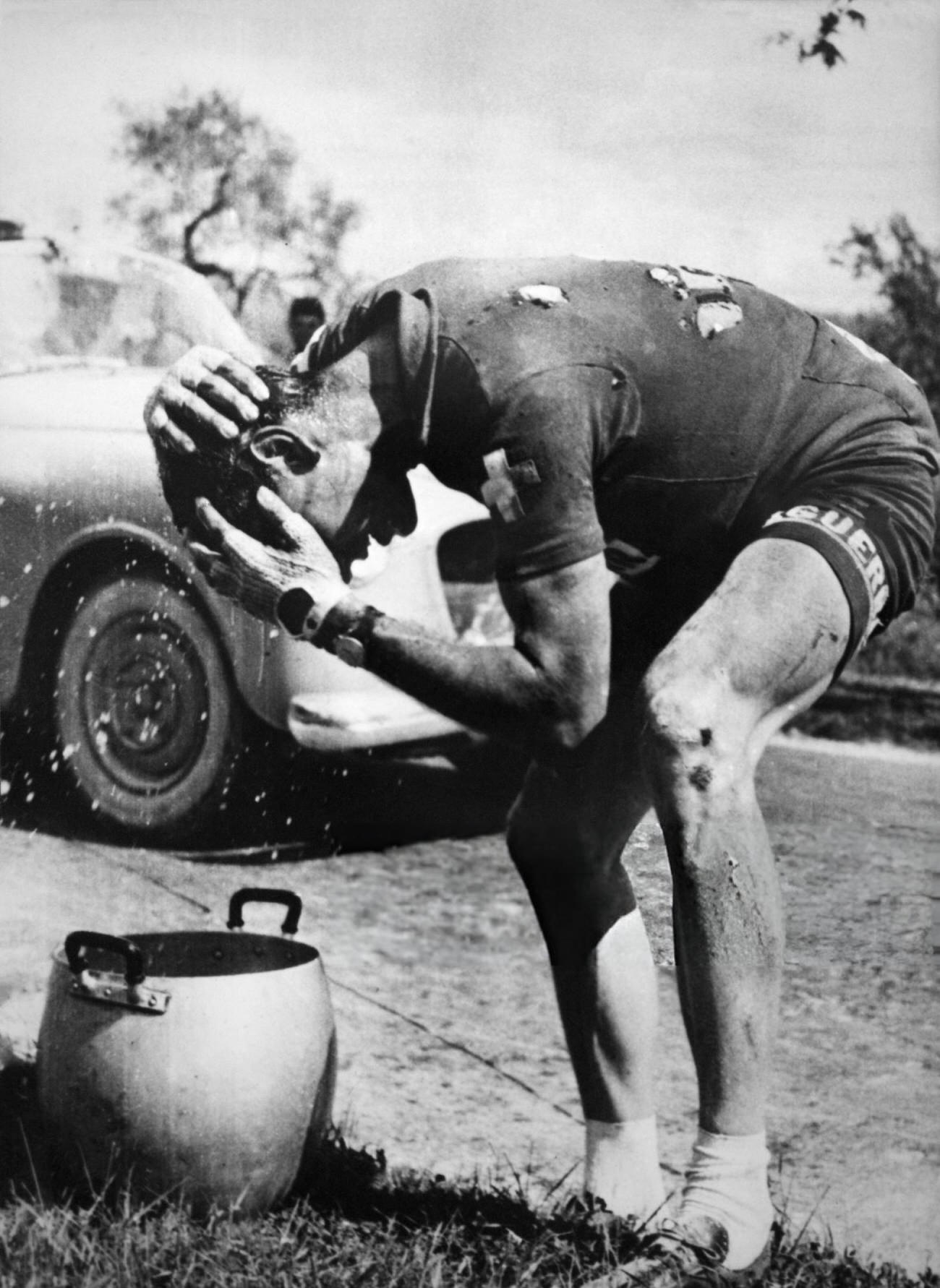
Bent over at the roadside, Hugo Koblet presses both hands to his head as water splashes down, a brief ritual of recovery after a fall in the 1953 Tour d’Italie. The scene is intimate and unguarded: torn patches on his jersey, scuffed skin on his legs, and the tense, inward posture of a rider trying to steady himself. A simple metal pot on the ground becomes the day’s most valuable piece of equipment, offering relief more immediate than any cheering crowd.
Behind him, a support car idles close, its rounded bodywork and heavy wheel anchoring the image in the era of mid-century cycling. There’s no grand finish-line banner here—only sunlit roadside, soft trees in the distance, and the gritty reality of a long stage where accidents were part of the bargain. The photographer lingers on the human scale of the Giro: endurance measured not just in kilometers, but in the small pauses that keep a champion moving.
For readers drawn to classic cycling history, this moment captures the texture of the sport before modern helmets, team buses, and polished media zones. Koblet’s quick wash is both practical and symbolic, a reset before returning to the race’s relentless rhythm. As a piece of Tour d’Italie 1953 photography, it offers a powerful reminder that the legends of road racing were built as much on resilience as on speed.