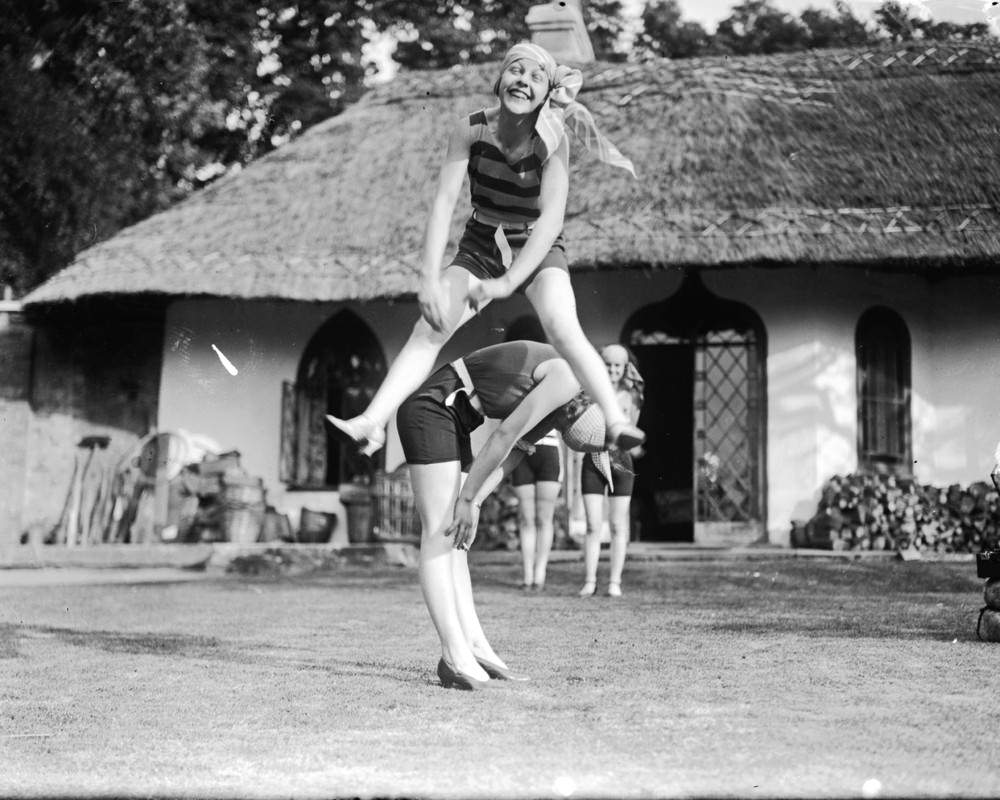
Laughter and motion take centre stage as friends in 1929 turn a quiet holiday moment into a spirited game of leapfrog, their striped swimwear and swimming caps marking the era’s practical seaside-and-riverside fashion. The timing of the jump, caught mid-air, gives the scene an infectious energy that still feels immediate nearly a century later. Set beside the river at Harwell in Oxfordshire, it’s a reminder that leisure in late-spring Britain could be as simple as fresh grass, good company, and a little friendly competition.
Behind the players sits a thatched-roof building with arched openings and a sturdy door, anchoring the photograph in a distinctly rural English setting. A couple of onlookers linger in the background, while everyday objects—stacked items and garden clutter—quietly suggest a lived-in holiday spot rather than a formal resort. The contrast between the crisp figures in the foreground and the softer backdrop lends the image a candid, holiday-snapshot quality, even though it’s carefully framed.
May 1929 falls in a period when outdoor recreation and informal sport were becoming part of modern identity, and this playful scene fits neatly within that wider story of interwar leisure. For readers searching vintage photos of people playing leapfrog, 1920s swimwear, or social history in Oxfordshire, the picture offers both charm and context. It preserves a fleeting instant of friendship by the river—sunlit, unscripted, and unmistakably alive.