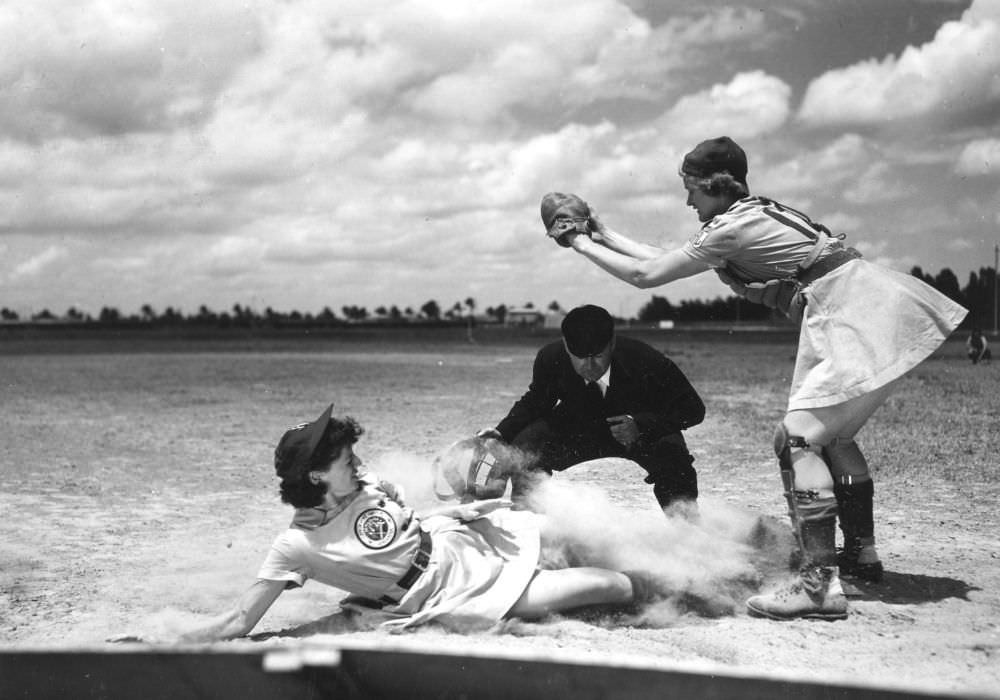
Dust hangs in the air at home plate as a runner slides hard, legs extended, while a fielder reaches forward with glove raised and an umpire leans in to judge the play. The uniforms—short sleeves, belted skirts, and sturdy knee guards—place the action squarely in the world of the All-American Girls Professional Baseball League, where athletic intensity met carefully managed public image. Under a broad sky and on a bare infield, the moment feels both theatrical and unmistakably competitive.
Beyond the pop-culture glow of “A League of Their Own,” photos like this point to the league’s everyday reality: bruises, split-second decisions, and fieldcraft honed through constant play. The runner’s determined slide and the fielder’s poised tag show a brand of women’s professional baseball that demanded speed, courage, and precision. Even the umpire’s close stance underscores how seriously these games were officiated and contested.
For readers searching the history of women in sports, the AAGPBL story offers more than nostalgia—it’s a record of professional opportunity, public spectacle, and gritty on-field labor during the 1943–1950s era. This post pairs historical context with vivid images to explore how the league was promoted, how the athletes performed, and why their legacy still matters in conversations about baseball history and women’s sports.