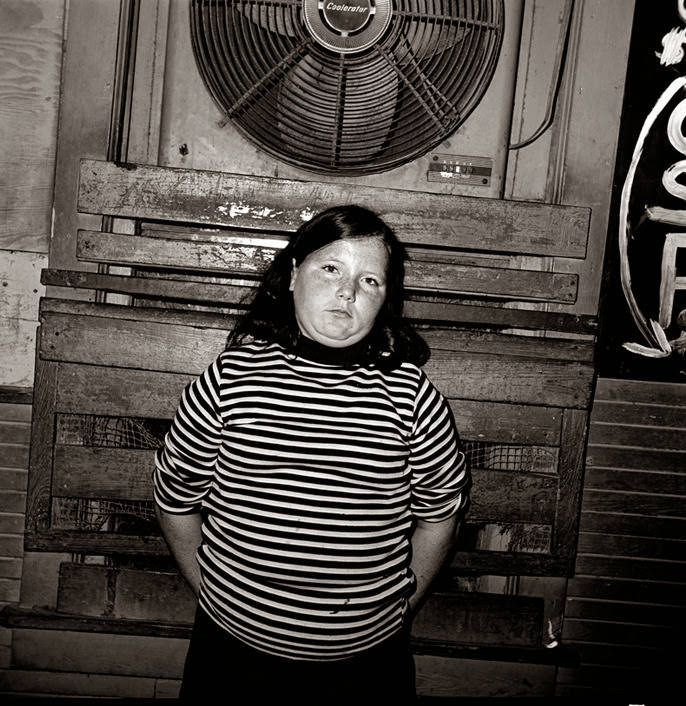
Under the hum of an oversized wall fan, a young rink-goer pauses against rough wooden slats, striped shirt echoing the bold, graphic look that defined so much early-1970s style. The setting feels distinctly backstage—less about the polished glide on the floor and more about the waiting, the cooling down, the quiet minutes between bursts of music and motion. Even without seeing skates in frame, the environment reads as roller rink culture: utilitarian walls, improvised seating, and the sense of a busy venue just outside the shot.
Seven months in 1972 is enough time to watch a youth scene settle into habits, and this portrait suggests the candid intimacy that comes from returning again and again with a camera. The subject’s direct gaze—unposed but unflinching—turns a fleeting evening hangout into a document of presence, attitude, and self-fashioning. It’s a reminder that the Sweetheart Roller Skating Rink wasn’t only a sports space; it was also a social arena where teens negotiated identity in front of friends, lights, and lenses.
For readers interested in 1970s youth culture, roller skating history, and community sports spaces, images like this offer details that written records often miss: textures, signage fragments, and the everyday architecture of leisure. The stark lighting and close framing emphasize mood over spectacle, hinting at the rhythms of rink life beyond the main floor. As part of a longer sequence, this moment helps map how a local skating rink could double as a clubhouse, a stage, and a snapshot studio for a generation coming of age.