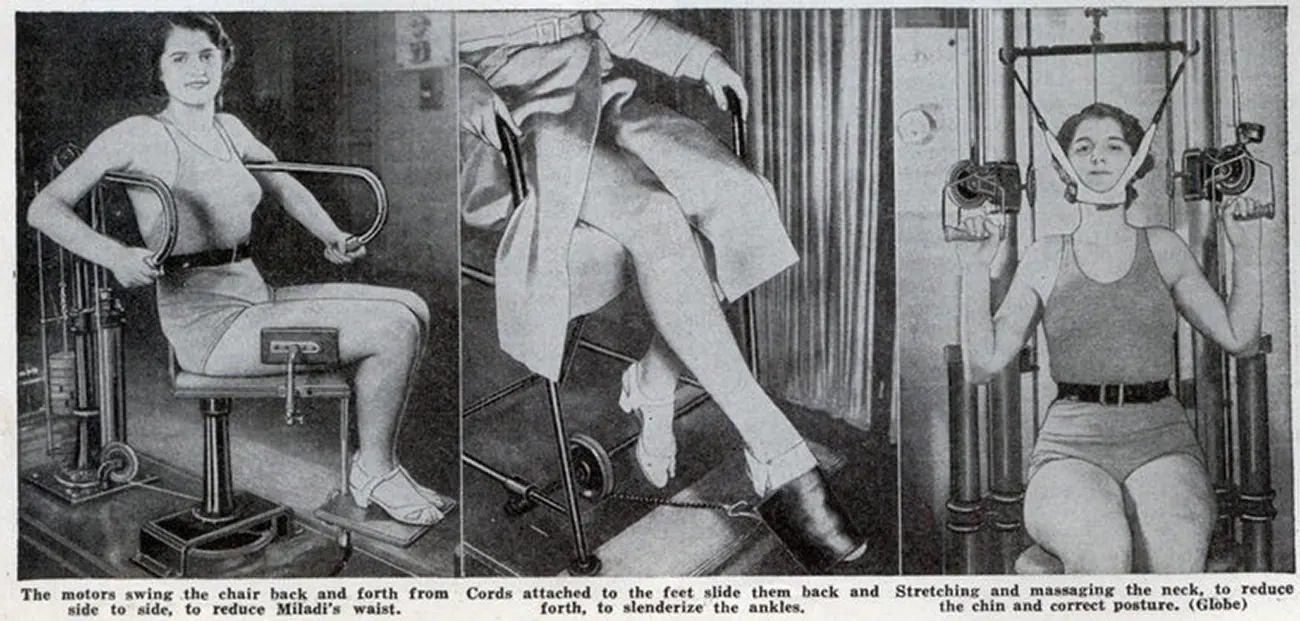
Odd contraptions once promised to “engineer” fitness with the push of a button, and this vintage exercising machine is a perfect example of that mechanical optimism. The photo presents a set of chair-like stations fitted with pulleys, straps, and motor-driven parts, turning exercise into something that looks part salon treatment, part laboratory demonstration. Even at a glance, it’s easy to see how early gym culture borrowed from industry—metal frames, cables, and attachments designed to put the body into motion whether the user worked for it or not.
On the left, a seated user grips curved handles while the chair appears built to swing or rock, suggesting a passive workout meant to narrow the waist through repeated movement. In the center view, cords are fastened to the feet, inviting sliding motions that resemble assisted leg work rather than free movement. The right-side setup raises the stakes with a head-and-neck harness and overhead pulleys, a reminder that “posture correction” and “reducing the chin” were marketed goals alongside strength and endurance.
Machines like these sit at the crossroads of sports history, beauty standards, and the ever-changing business of self-improvement. Long before sleek treadmills and smart wearables, inventors and entrepreneurs sold the idea that a device could target specific body parts with scientific precision. For anyone searching for weird exercise machines from the past, this image captures how yesterday’s workouts often relied on spectacle—promising transformation through gears, straps, and a faith in modern mechanics.