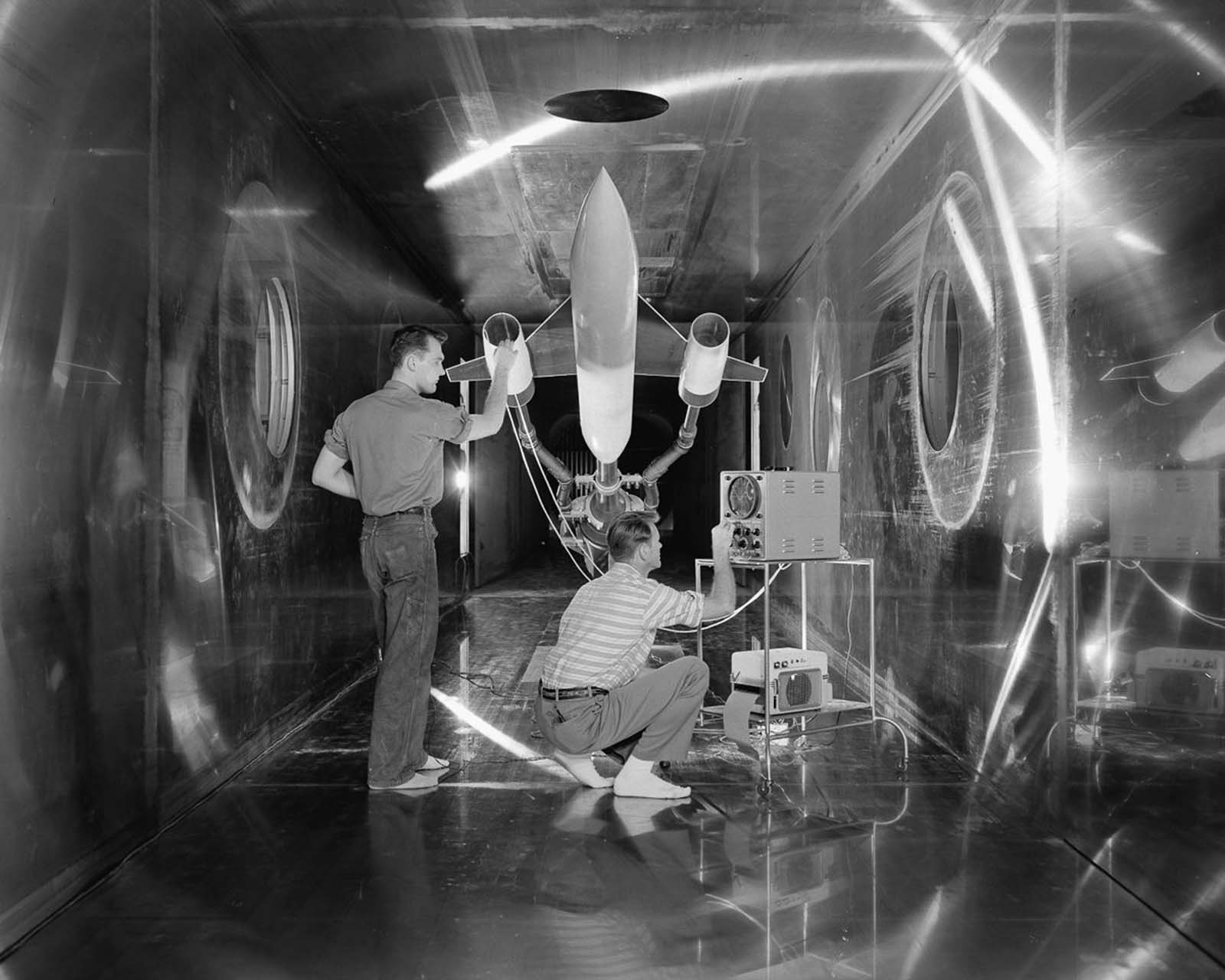
Deep inside the 10 x 10-foot Supersonic Wind Tunnel test section, two engineers pause before the roar of a test run, treating their aircraft model with the careful attention usually reserved for full-sized machines. The sleek, pointed fuselage is suspended in the center of the tunnel, framed by smooth metallic walls that reflect light in hard, bright streaks. In this 1957 scene, the drama isn’t in motion yet—it’s in the stillness and precision that comes right before the air starts moving.
One man stands close to the model’s nose and wing area, appearing to make a final visual inspection or adjustment, while another crouches at a rolling instrument cart, hands on dials and switches. Cables trail from the equipment toward the test setup, a reminder that supersonic research depended as much on careful measurement as on daring ideas. Porthole-like windows along the tunnel walls and the immaculate, polished floor amplify the sense of a controlled environment built for pushing aerodynamics into new territory.
Long before computer simulations could answer a question in minutes, wind tunnel testing like this shaped the future of high-speed flight through repeatable experiments and meticulous checks. The photo speaks to mid-century innovation in aerospace engineering: models, sensors, and technicians translating invisible airflow into numbers engineers could trust. For anyone exploring inventions and aviation history, this moment offers a vivid look at the disciplined craftsmanship behind supersonic aircraft development.