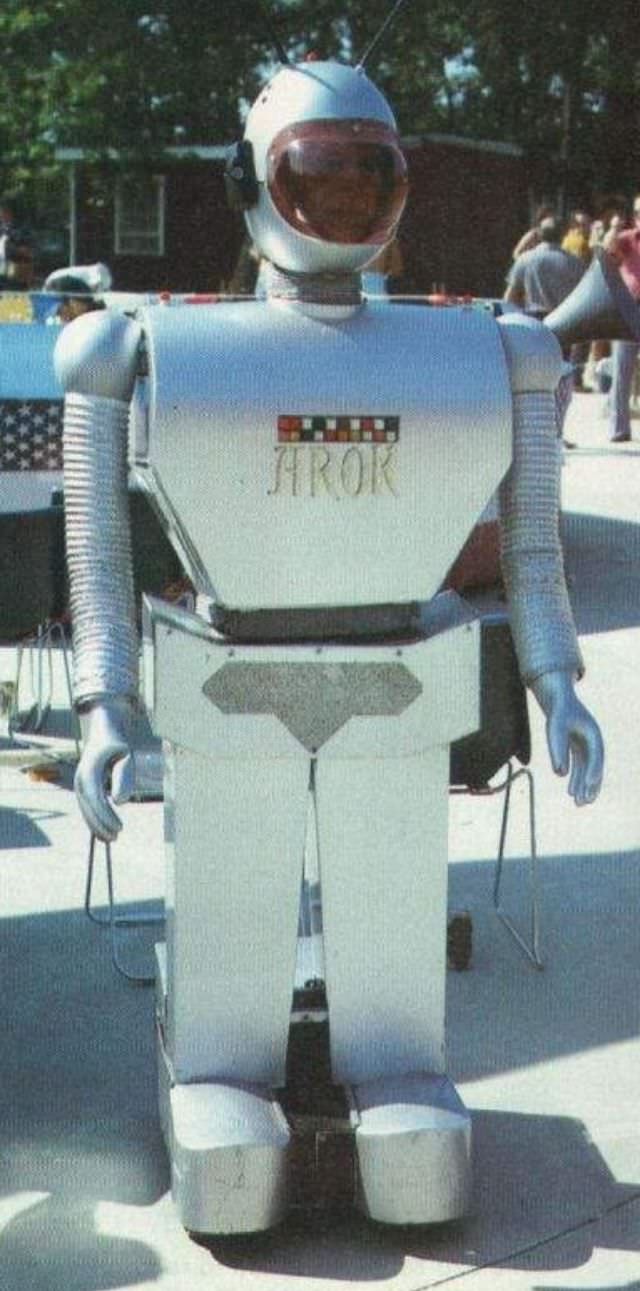
AROK stands upright like a homebuilt astronaut, its rounded helmet crowned with slender antennae and a tinted visor that hints at a person-sized machine meant to meet the future face-to-face. The body is all crisp panels and simple geometry, with corrugated tubing for arms and glove-like hands hanging at the sides. A bold “AROK” label and a strip of multicolored blocks across the chest give the robot a handmade, proudly exhibited identity that fits the post’s “Inventions” theme.
Behind the figure, an outdoor gathering unfolds in soft focus—spectators, bright daylight, and tables or equipment that suggest a public demonstration rather than a studio portrait. Cables trail near the robot’s legs, a reminder that many 1970s robots were as much about wiring and power as they were about science-fiction style. The overall look blends practical fabrication with showmanship, capturing the era’s fascination with robotics, space-age design, and do-it-yourself engineering.
Ben Skora’s AROK belongs to that optimistic moment when communities and hobbyists imagined robots stepping into everyday life, not just industrial floors or movie screens. Details like the oversized feet, segmented arms, and helmeted head read like a bridge between costume, prototype, and exhibition display—exactly the kind of artifact that turns a simple photo into a story about ambition. For readers searching for 1970s robot history, vintage invention culture, or early robotics design, this image offers a vivid snapshot of how the future was once built by hand.